Sunday, 20 April 2014

Tourism development: Shuttle bus service to be launched for Murree

Chief Minister Shahbaz Sharif. PHOTO: INP/FILE
LAHORE: 
“The Tourism Development Corporation of the Punjab will soon launch a shuttle service from Bhara Kahoo to Murree to address the problem of traffic congestion on Murree Road,” Chief Minister Punjab Shahbaz Sharif said at the inauguration ceremony of the Lahore International Tourism Expo on Saturday.
Sharif said Murree was a popular tourist destination and was facing immense traffic congestion.
The chief minister said reviving tourism was the need of the hour. He said Pakistan was a beautiful country and it was unfortunate that its citizens were unable to access some of the areas because of security concerns.
He said a boost for tourism would generate thousands of jobs. He said the government had launched a number of projects in this regard. He said the Walled City of Lahore Authority was restoring several historic sites at the Walled City and had already launched a number of programmes to encourage tourists to visit the area.
He said the TDCP would soon introduce a shuttle bus service to resolve traffic problems at Murree. He said tourist resorts would be developed to encourage tourists to visit Pakistan.
Delegations and diplomats from Turkey, Nepal and UK were present. The chief minister presented souvenirs to heads of foreign delegations participating in the tourism expo.
The chief minister said delegations from several countries visited Lahore and had been impressed by the facilities provided to them.
“Participation of these delegations is evidence that Pakistan is a peaceful country,” he said.
He thanked the delegates and said the government would welcome their proposals for promotion of tourism.
Minister for Education and Tourism Rana Mashhood Ahmad Khan also spoke on the occasion. He said work was being carried out on a theme park in Lahore. He said the government was working on its first tourism policy which would be announced later this year.
TDCP officials said they would start a convertible bus service for tourists so that they could enjoy the weather and the scenery. They said some details of the plan were yet to be finalised.
More than 100 stalls were set up at the expo highlighting various tourism activities.
Representatives of hotel and airline industries, tourism clubs, tourism agents and the Pakistan Navy have set up stalls at the expo.  A group of Turkish dancers also performed traditional dances.
An artist performed a traditional Rubab Mangi at the stall for Khyber Pakhtunkhwa.
Rubina Ghalib, sales manager of Serena Hotel, it was important to promote tourism not only to bring business but also to promote a positive image of the country.
Azad Jammu and Kashmir Tourism and Archaeology Assistant Director (Publicity) Raiesud Din said people from Punjab visited Kashmir more than any other place.
He said there were more than 30 tourist destinations in Kashmir and dozens of unexplored sites.
He said government was working on improving infrastructure and that with better roads, tourist would be able to explore more areas.
Sultan Madad from Karim-a-bad Hunza had set up a stall of gems, where he had more than 20 different types of the stones on display.
He said the government should help promote the gem industry of the country. He said there were vast reserves of many precious stones such as tourmaline, aquamarine stone and rubies.
He said tourmaline and aquamarine stones were being exported to China. He said that they could fetch better prices but given trade restrictions, they were left with no other option.

The day 69 children died

The attack was on a religious seminary in Chenegai, in Bajaur Agency. PHOTO: AFP/FILE
LONDON: It is one of the worst incidents of the entire drones campaign, yet one of the least reported. A CIA strike on a madrassa or religious school in 2006 killed up to 69 children, among 80 civilians.
The attack was on a religious seminary in Chenegai, in Bajaur Agency.
CIA drones attacked on October 30, flattening much of the school. Their target was reportedly the headmaster, a known militant. According to some reports, there was also a token late contribution to the assault by Pakistani military helicopters. But dozens of children were also killed, the youngest aged seven.
Veteran journalist Rahimullah Yusufzai, speaking to the Bureau of Investigative Journalismfrom Peshawar, recalls visiting the village just after the strike: “People were devastated. I met with a father who had lost two children. He was very patient, talking of how God must have willed this, but he was clearly traumatised.”
Initially the Pakistan Army claimed that it had carried out the bombardment, even as shops and offices closed across the region and protests spread. But as the scale of the attack unfolded, the story changed. The Sunday Times carried a report from a key aide to then-President Pervez Musharraf stating: ‘We thought it would be less damaging if we said we did it rather than the US. But there was a lot of collateral damage and we’ve requested the Americans not to do it again.’
A week after the attack, a local English newspaper published the names and home villages of 80 victims. Sixty-nine were reported as children aged 17 or under. According to the paper’s sources,
It was claimed that ‘one of the deceased was only seven-year old, three were eight, three nine, one was 10, four were 11, four were 12, eight were 13, six were 14, nine were 15, 19 were 16, 12 were 17, three were 18, three were 19 and only two were 21-years old’.
Yusufzai is adamant that the attack was the work of the CIA: “I am absolutely confident, 100 per cent, that this was carried out by US drones, based on witnesses at the time and the subsequent comments of [Pakistani] government officials.”
The US Embassy in Islamabad declined to comment on the case when offered the opportunity by the Bureau and The Express Tribune.

Saturday, 19 April 2014

Govt to earn Rs143b from OGDCL, PPL and UBL sell-off

Govt to earn Rs143b from OGDCL, PPL and UBL sell-off
ISLAMABAD - Without facing any serious political pressure, the PML-N government is fast moving to complete its privatisation programme, as another prerequisite of appointing financial advisors for disinvesting shares of three entities (OGDCL, PPL, and UBL) would be met by April 22.
As the government has planned to generate Rs 143 billion for the disinvestments the shares of three public sector entities by June 30 this year, the Privatidation Commission is all set to appoint financial advisors for the prospective capital market transactions (OGDCL, PPL, and UBL) by April 22 2014.
The government, in first stage, would offload 10pc, 5pc and 20pc of shares in OGDCL (Oil and Gas Development Company Limited), PPL (Pakistan Petroleum Limited) and UBL (Untied Bank Limited) respectively before June 30 this year, which would generate Rs 143 billion.
Finance Minister Senator Ishaq Dar on Friday, chairing a meeting to review the progress made in the process of divestment of three Public Sector Entities (PSEs), has directed the Privatisation Commission to ensure transparency, openness and level playing field at all levels of the process and to complete the whole process.
Chairman Privatisation Commission, M. Zubair in a presentation given to the Finance Minister said that the Privatisation Commission (PC) is working in an efficient and transparent manner to create an enabling environment that attracts private capital from foreign and domestic investors and also brings in qualified and experienced owners and operators.
According to the memorandum of economic and financial policies 2013-14 and 2015-16, the chairman briefed the Minister on appointment of financial advisors and informed that the evaluation of technical and financial proposals is in final process. He said that the financial advisors for the first batch of prospective capital market transactions (OGDCL, PPL, and UBL) will be completed by April 22.
The Federal Minister was also informed that the process of transfer of properties to PTCL is being completed on fast track basis and only 4 transferable properties are left to be transferred.
The Privatisation Commission board had so far given approval of privatisation/ disinvestments of shares of 11 public sector entities. The 11 entities including Pakistan International Airlines (PIA), Oil and Gas Company Limited (OGDCL), Habib Bank Limited (HBL), United Bank Limited (UBL), Allied Bank Limited (ABL), Pakistan Petroleum Limited (PPL), National Power Construction Company (NPCC) and Heavy Electrical Complex, two Discos (Fesco and Lesco) and one Genco (TPS Muzaffargarh 1350 MW). However, the government would divest the shares of three public sector entities OGDCL, PPL and UBL before June 30 2014
The today’s (Friday) meeting was also attended by Dr Waqar Masood, Finance Secretary, Rana Assad Amin, Advisor to the Finance Ministry and senior officials from Finance Ministry and Privatization Commission.

The biggest Villian in Cricket history ..

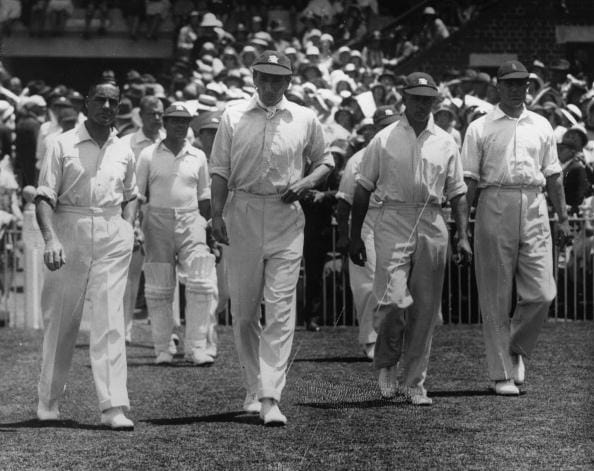
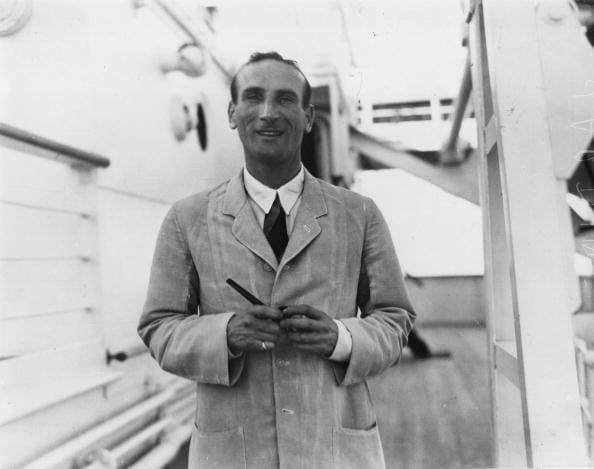
Douglas Jardine
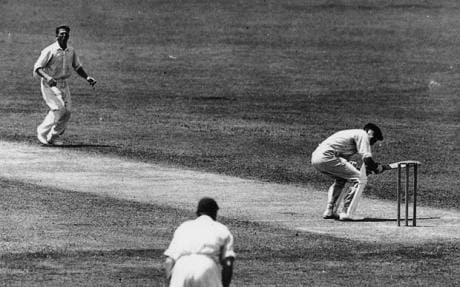
“B*st**d… B*st**d… B*st**d” – The entire Adelaide Oval vented their anger as the Australian keeper Bert Oldfield lay on the ground, almost senseless, with a fractured skull. The entire Australian squad ran out on the field to help “Oldie” off the ground as the opposition stood surrounded by angry fans chanting expletives.
Injuries are a part of cricket. Every cricketer has found himself grimacing with pain at some point in his career. But what happens when the sole objective of your opposition is to hurt you physically and stretcher you off the field?
An explosion that changes the game forever!
“Bradman….Bradman…Bradman…” – The Melbourne Cricket ground echoed the name of the greatest batsman in the history of cricket on his return to the Ashes in 1932 after missing out the first Test. The master batsman gleefully accepted the hero’s welcome but little did he know what his opposition had in store for him.
Two leg slips, leg gully, deep fine leg, long leg, short square leg and a very silly mid on – that’s how the English captain greeted SirDon Bradman to the crease. Bradman took guard, Bill Bowes ran in, dug the ball short at his ribs, Bradman swiveled to play the pull shot but only managed to drag the ball on to his stumps – the trick had worked. Bradman walked back for a golden duck!
How do you stop a batsman who amassed 974 runs at a batting average of 139.14 in a five Test series?
You possibly can’t.
All you can try is to find a weakness, lay a trap and hope that your bowlers exploit it. But when someone goes on to record a career batting average of 99.94, it suggests that not many succeeded in exploiting them.
Fender was right. After his record-breaking 1930 Ashes, England needed fresh ideas and outlandish tactics to rein in Bradman’s almost supernatural skills. They needed a plan and a man who would not only stand up to the Aussie genius, but also would end his tyrannical master-class.
Enter Douglas Jardine. England appointed Jardine for the job of bringing back the Ashes and in the quest for sacred urn, Jardine envisaged an idea – an idea so strong that it shook the foundations of the game.
To appreciate Douglas Jardine, one has to travel back in time to understand the times he grew up in. Born in Bombay, Douglas Jardine was the part of the British Raj. He grew up in a world that saw British dominance around the world and was tutored in the quintessential British qualities of bull-headed determination, cold-hearted resolve and patrician disdain. Being brought up in the Raj-era, he also had an ingrained hatred towards the Australians, whom he often referred to as “Barbarians”.
Jardine was sent to Winchester at the tender age of nine. Separated from his parents, Jardine struggled to fend off bullies in school. Though he had the talent, he couldn’t unleash his full potential until he met Rockley Wilson. Wilson became his mentor and passed on the most important advice of his life –
“You don’t bowl a batsman out…you plan him out!”
Under Wilson’s tutelage, Jardine flourished as a batsman and a shrewd tactician. He scored heavily for Winchester and was touted as one of the finest openers after Herbert Sutcliffe. However, Jardine’s life changed when he met Percy Fender, the then captain of Surrey, during a game between Winchester and Eaton.
During this game, Jardine sidestepped the spirit of cricket for the first time. He asked one of his bowlers to “Mankad” Eaton’s best batsman without giving him a prior warning. Winchester won the game but Jardine faced rebuke from the authorities and his fellow mates.
Percy Fender, though, found nothing wrong with his methods. Fender, one of the best captains who never led England, was known for his out-of-the-box ideas and was always at war with the MCC Lords for his notorious knack of bending the rules. He congratulated Jardine for his move and took him under his wings at Surrey.
Thus began Jardine’s foray into leadership. After replacing Fender as the Surrey captain, Jardine took over “Mission Australia” in 1932. He believed that to beat Australia, England had to beat Bradman first. So Jardine’s main focus was to recognize that one elusive weakness of Don Bradman. He went through his batting reels, talked to bowlers and spent sleepless nights going through his records.
However, it was Harold Larwood, who accidentally handed Jardine the breakthrough while revisiting Bradman’s double hundred at the Oval.
“I’ve got him…he’s yellow” – That was it! Jardine came up with his famous “leg-theory” while watching Bradman’s reel at Percy Fender’s house. On a lively Oval track, when Larwood bowled short at his body, Bradman flinched and didn’t look at ease.
Jardine decided to implement the “leg –theory” to stop Don Bradman. He had the plan but needed a lethal weapon who would execute it with aplomb. He didn’t just need a bowler; he needed a bowler seeking revenge. He needed Harold Larwood. Jardine selected a five man pace battery, spearheaded by the dangerous Harold Larwood, to neutralize Don Bradman and bring the Ashes back to the English shores.
One man did. Douglas Jardine.
Jardine was perhaps the only man who dared to cross the line to take a serious crack at the greatest batsman the world had ever seen.
In 1928, Jardine travelled to Australia with the MCC team along with England’s new pace sensation Harold Larwood. If England handed the Test caps to Jardine and Larwood, Australia introduced the boy wonder from Bowral, Donald Bradman. Although Bradman had a modest Test debut, he left an indelible mark on Jardine. He returned to England and declared Bradman as the greatest that the world will ever see.
“He can do things, no other batsman can. He is unstoppable” – Douglas Jardine proclaimed after the 1928 tour.
The MCC Lords laughed off Jardine’s words but their jaws hit their knees with amazement when Bradman took centre-stage and launched an onslaught in the 1930 Ashes tour. He toyed with England’s bowling and ended up with extraordinary scores that dented the confidence of England’s fastest bowler, Harold Larwood, who nurtured thoughts of giving up cricket after his sufferings in the hands of the Aussie master.
However, among this carnage, Bradman unknowingly left a clue that led to one of the most controversial Test series ever.
“I feel sure something new will have to be introduced to curb Bradman.” - Percy Fender, the Surrey captain, said after being on the receiving end of a Bradman assault.
The idea was conceived at Fender’s house, tried out at the nets in Surrey, explained in the train to Melbourne and finally perfected at the first warm up game. Jardine didn’t take the field but instructed Bob Wyatt, the stand-in captain, to let the three fast men bowl short at the batsman’s body to a packed leg-side field. It surprised the Aussies but they didn’t know what awaited them.
bodyline
The following five Tests saw Voce, Bowes and Larwood relentlessly throw down a barrage of short pitch deliveries at the batsmen with seven fielders on the leg side with terrifying results– broken ribs, fractured skulls and unprecedented on and off field hostility.
The battered and bruised Aussie cricketers protested but the board didn’t listen. Pelham Warner, the manager of the MCC team, warned Jardine of the consequences but Jardine didn’t budge and events took a nasty turn at Adelaide. Bill Woodfull received a snorter from Larwood in his ribs that saw the Aussie captain go down wincing in pain. The non-striker, Bradman, and the entire English team ran towards him but Jardine stood his ground applauding, “Well bowled Harold!”
Much to the bewilderment of the batsmen, he switched the fielders towards the leg side and signaled Larwood to bowl at Woodfull’s body. The Adelaide crowd watched in amazement, brimming with anger but Bert Oldfield’s injury sent them into complete frenzy and the name of Douglas Jardine became synonymous to “unsporting” behavior.
England regained the Ashes but every action has its consequences. The MCC banned the “leg-theory” and treated Jardine as an outcast. The world resented his actions. Australian fans burned the Union Jack flag during the Sydney Test to express their anger at his tactics. And Jardine etched his name as the “Inglorious B*st**d” of Test cricket.
But was he wrong in what he did? Or was he reprimanded for being clinically efficient?
There was nothing illegal about Bodyline. Jardine found a weakness and built a strategy around it. He had immense respect for Bradman but decided to fight him with fire rather than platitude. He just proved that no athlete is perfect and no matter how powerful your enemy is, there’s always a way to weaken him. His strategy worked and perhaps that led to his downfall.
Douglas Jardine is regarded as the biggest villain in cricket history because society tends to vilify what they don’t understand. Jardine’s outstanding batting ability was forgotten and he was maligned for life. Jardine was a complex man motivated by a cause. He believed that he infantry wages the war but it’s the generals who win them. He was appointed for a job and he delivered.
The cricket world didn’t understand him and robbed him off his achievement. He was a great captain but his tactical genius became his biggest enemy. The world detested him because he won in an era where the “bad guy” wasn’t supposed to win.
Cricket history might remember him as the one who stooped to conquer but Douglas Jardine was the first captain who proved that a strategy can even fend off the best. England needed a super villain to stop Bradman’s super-heroic efforts and Jardine enacted it to the tee.  He may have been wrong but he and his men scripted a story that would live on as long as cricket will be played, because, as Alfred Hitchcock once said -
The more successful the villain, the more successful the picture…”

Klopp rules out Barcelona move: I'm still in love with Dortmund

Klopp rules out Barcelona move: I'm still in love with Dortmund
Tata Martino's position as Blaugrana coach is under intense scrutiny but the German insists that he is not interested in taking charge at Camp Nou
Jurgen Klopp has moved to reassure Borussia Dortmund fans that he has no intention of leaving forBarcelona, claiming that he is still "in love" with the Bundesliga club.

The current incumbent coach at Camp Nou, Gerardo Martino, is currently under intense media pressure after a disastrous week for the Blaugrana in which they were knocked out of the Champions League, slipped to third in La Liga and beaten by rivals Real Madrid in the Copa del Rey final.

Klopp has been touted as a potential replacement, with a Marca-run poll revealing that the German is the fans' favourite to take over.

However, the former Mainz told BVB Total!: "No one needs to worry. We are all still a little bit in love with this club and how things are done here."

However, Klopp could not resist a joke when asked about current Mainz coach Thomas Tuchel's claim that the 46-year-old would make an ideal host for the German television show, 'Wanna bet?'.

"I would love to host it," Klopp enthused, "but only if it takes place in Barcelona!"

The BVB boss has led the club to two Bundesliga titles and one DFB-Pokal since arriving at Signal Iduna Park in 2008.

Diamer-Bhasha will be top priority: new Wapda chief

LAHORE: Water and Power Development Authority (Wapda) chairman-designate Zafar Mehmood has briefly explained his working agenda, putting launch and completion of the 4,500MW Diamer-Bhasha Dam project on top of his priority list.
Mehmood, a former federal secretary for water and power and commerce, is about to quit his current job as the Punjab Public Service Commission (PPSC) chairman. He has submitted his resignation to takeover Wapda.
The seat became vacant after Prime Minister Nawaz Sharif accepted Syed Raghib Abbas Shah’s resignation on Thursday. Shah had tendered his resignation to the premier a couple of days ago citing personal reasons.
“Diamer-Bhasha Dam project is vital for the country in terms of power generation and overcoming the prevailing energy crisis, therefore, it will be on top of my priority list,” he said while talking to Dawn on Friday. “Moreover, this project is the need of the hour to avoid accumulation of sediments in Tarbela and other dams.
The sediments are not only reducing their life but also reducing their power generation capacity gradually. So we will gear up various assignments leading to launching and completion of Bhasha and other projects in hand,” Mehmood explained.
According to a report compiled by Wapda on Feb 3 on Bhasha dam, the Tarbela, Mangla and Chashma reservoirs have already lost about 5.3MAF due to sedimentation. “It is estimated that by 2016, this loss will increase to 6.6MAF, almost equal to the original combined capacity of Mangla and Chashma reservoirs,” the report reads.
Mehmood said launch and completion of Bhasha dam project would be helpful in reducing sedimentation in the existing major dams, increasing power generation, conserving water and controlling floods.
He said he would prefer visiting the dam site soon after taking over. “I have submitted my resignation to the prime minister in order to get myself relieved from the post of PPSC chairman. I hope the resignation will be accepted very soon. And hopefully, I will assume the new office on Saturday (today) or surely on Monday,” he said, confirming the government had already issued a notification about his appointment as Wapda chief.
Mehmood said since he had worked as water and power secretary in the federal government, he knew about related issues. “But I don’t know exactly about the current status of the projects initiated during my tenure in the Ministry of Water and Power as secretary. I am studying Wapda’s annual report to know the current status,” he added.

Trade: MoC signed to enhance fruit exports

The Central Asian states are a lucrative market for mango, kinnow, potato, onion, value added products of fruits, palm oil, meat and rice. PHOTO: FILE
KARACHI: To explore new markets for the horticulture sector, the Pakistan Fruit and Vegetable Exporters, Importers and Merchant Association (PFVA) has signed a Memorandum of Cooperation (MoC) with the International Association of Silk Route Trade (IASRT) Kyrgyzstan to strengthen bilateral trade.
The MoC was signed after a three-day international conference held recently in Islamabad. The conference was attended by dignitaries, businessmen and exporters from seven countries of South and Central Asia.
The MoC was signed by PFVA Chairman Abdul Malik and the IASRT head who said that the two associations would work for exploring trade opportunities in the region especially horticultural products which would ultimately benefit millions of people across farms and factories.
Elaborating the importance of trade with Central Asian states, PFVA spokesperson Waheed Ahmed said that Pakistan could earn over $400 million through fruits and vegetable exports and value added fruit pulp to Central Asian markets.
According to him, the Central Asian states are not only a lucrative market for mango, kinnow, potato, onion, value added products of fruits, palm oil, meat and rice but the route could also lead Pakistani products to Russian and European markets.
Pakistan has the advantage of land links with strategically landlocked countries of the region. He said that visiting importers and traders of the sector from Commonwealth countries have shown a keen interest in Pakistani fruits, vegetables, technology and expertise in processing food. They were also interested in getting help from Pakistan in the fruit processing and packaging area.