Wednesday, 25 December 2013

Top 10 Highest-Paid English Soccer Players in 2013

Top 10 Highest-Paid English Soccer Players in 2013
After the establishment of the first modern set of rules or Laws of the Game in 1863, football became a national sport of England. A home to around 40,000 association football clubs, England holds the record for having the world’s oldest established team, Sheffield FC. The FA Cup is the game’s oldest national knockout competition with the Football Association being the oldest national league.
Today, England holds the Premier League as its main domestic organization, regarded as one of the most anticipated, watched and highly enjoyed sports leagues in the world. Several top-class teams like Liverpool, Arsenal, Chelsea, Manchester United, Manchester City and others have added glory to the European football scene at different times, with a total of five English clubs winning the UEFA Champions League.
Called ‘The Three Lions’, the national team of England has won just one World Cup in 1966, but legends like Gordon Banks, George Best, Eric Cantona, Bobby Moore, Sir Boby Charlton and Duncan Edwards are remembered as some of Britain’s greatest ever players. The present national team of England also looks very promising, as they have qualified for the finals of Brazil’s 2014 World Cup in group D, together with Italy, Uruguay and Costa Rica.
With the competitive environment of this sport in England, it isn’t surprising to find English players ranking on the list of highest-paid footballers in the world. With the approach of the January transfer market, we might also see some great deals cast, involving some of these players. Below we list the top 10 highest-paid English football players in 2013.

10. Joe Hart – Manchester City – £4.68 million

joe
One of the most prolific and talented goal keepers in England, Joe Hart plays for the English national team and Premier League giants Manchester City. A regular goal keeper at the England U-21 team, Hart got into the national squad in 2008. After starting out his career at Shrewsbury United in 2003, Manchester City was delighted with his performance in goal and signed him in 2006 for just £100,000. He retained the golden glove award for keeping the highest number of cleansheets for Manchester City side in the 2010-11 season, and won it two more times in 2011-12 and 2012-13. With recent poor performances in the Premier League, he is facing tough competition from his teammate Costel Pantilimon. Whatever may happen, Hart still remains one of the top goalkeepers in the Premier League and earns £4.68 million a year, making him the second-highest-earning keeper in the  league after Petr Cech.

9. Glen Johnson – Liverpool – £5.20 million

johnson
Capped 49 times on England’s national team, Glen Johnson is a defender playing for the Liverpool side in the English Premier League. After starting out his career at West Ham United in 2002, he was pursued on loan by Millwall. It was Chelsea that signed him in 2003 for £6 million as the first purchase of the Abramovic era. He again spent part of his career on a loan spell at Portsmouth in 2006 and signed for a fee of £4 million. Johnson joined Liverpool next for a fee estimated at £17.5 million in 2009. Born to a poor family, this defender is well-deserving of his yearly salary of £5.20 million in 2013.

8. Rio Ferdinand – Manchester United – £5.98 million

rio-ferdinand-7
Rio Ferdinand has been one of the best defenders for the Manchester United side after joining the club in 2002. Though he was not a consistent player for Man U, he has experience, having already played three world cups for the English national team. After getting enrolled in the West Ham United youth academy, Ferdinand played for the same club at the senior level and was transferred to Leeds United where he stayed until 2002. Manchester United signed him for £29.1 million in 2002. His passion extends off the field with a number of business interests including a restaurant and an online entertainment publication. Ferdinand has a £5.98 million salary in 2013

7. Gareth Barry – Everton – £6.24 million

Everton v Chelsea - Premier League
Gareth Barry currently plays for the Everton side on loan from Manchester City. He also plays for the English national team in the midfield position. One of the finest midfielders on the English team, Barry started his career at Brighton and Hove Albion and moved to the Aston Villa side. It was in 2009 when Premier League big-spenders Manchester City signed Barry for a fee of £12 million. Barry won his first full cap for the English national team in 2000 and has played 53 games for the country where he has three goals to his name. Barry takes home total yearly earnings of £6.24 million.

6. Ashley Young – Manchester United – £6.24 million

young
English footballer Ashley Young is a winger who plays for the Manchester United side in the Premier League. Starting out his career at Watford, he became a key player in the club and was transferred to the Premier League side Aston Villa in 2007 for a fee of £8 million. With his impressive first-team play for the Aston Villa side, he was transferred to the league champions Manchester United for an undisclosed fee. Young first played for the national team in 2007 and has been in 30 games, scoring 7 goals for the country. He is also one of highest-paid players on the Manchester United squad with a yearly total of £6.24 million.

5. Ashley Cole – Chelsea – £6.24 million

Ashley-Cole1
Considered by some to be one of the best left backs in the world, Ashley Cole started his youth career at Arsenal in 1999 and was transferred to Premier League giants Chelsea in 2006 for a fee of £5 million with William Gallas being the part of the deal. Cole started playing for the English team by making his place in the U-20 club in 1999 and U-21 in 2002, although he was already a part of the national senior squad by 2001. Cole has 106 caps for the English national team, but prolific left back is facing tough competitions from Leighton Baines. He is paid a total of £6.24 million in 2013.

4. John Terry – Chelsea – £6.76 million

john-terry-europe-league-final-captain-bring-trophy-stamford-bridge
John Terry is regarded as one of the most successful captains in English professional football, having won three Premier League titles, four FA Cups, two League Cups and a UEFA Champion’s League title. Starting out playing football at West Ham United youth academy, Terry moved on to the north London club Chelsea to pursue his career in 1995 and joined the first team after 1998. The 2005, 2006 and 2009 Club Defender of the Year makes a yearly salary of £6.76 million.  This sensational captain and leader is also the highest-scoring defender in the Premier League. Terry joined the English national side in 2003 and has won 78 caps for the country.

3. Steven Gerrard – Liverpool – £7.28 million

steven-gerrard-wallpaper
Born in 1980, captain of the Premier League club Liverpool and England’ national team,Steven Gerrard is a flexible central midfielder who can switch to second striker, right back, right winder and even the midfield position. Gerrard started his professional football career at Anfield in 1998 and has been playing for the club ever since. One of England’s greatest-ever midfielders, Gerrard has superb vision and runs effortlessly on the field. The club Footballer of the Year in 2005, Gerrard is the only player to have scored goals in the finals of the FA, League, UEFA and the Champions League Cup. Gerrard started his football career for his country in 1999 with the U-21 side, and since 2000 he has played 108 games, scoring 21 goals. Earning a weekly salary of around 160,000 pounds, Gerrard is third on the list of highest-paid English footballers with a yearly salary of £7.28 million.

2. Frank Lampard – Chelsea – £7.84 million

frank-lampard-chelsea-2013-hd-football
Frank Lampard is one of biggest names in English football in last decade and has been a part of Chelsea’s setup in a very successful era of the club’s history with three Premier League titles, one Champions League title and a European League title. When Lampard signed a five-year extension to his contract in 2008, he became the highest-paid player in Premier League soccer with a weekly salary of £150,000. His endorsement deals with Pepsi and Adidas brought his yearly income to £10.75 million from 2008 to 2012. After finishing his contract with Chelsea in 2012, Lampard signed a one-year extension which runs out towards the end of the 2013-14 season. He is reportedly being paid £125,000 a-week which adds to £7.84 million for the year.

1. Wayne Rooney – £15.61 million

Wayne Rooney -1481601
Wayne Rooney is the star of modern day Premier League football and is a striker for one of the top teams in Manchester United. He made his way through the Everton system to Man U in 2004 at a fee of £25.6 million. Named ‘Wazza’ by his fans, Rooney has helped Manchester United to the top of the Premier League five times, as well as winning one FIFA World Cup, two League Cups and the Champions League title in 2007-08. Rooney has already scored more than 200 goals for the Manchester United side, making him the fourth-highest goal scorer of all time for his team. Rooney debuted for the English U-15 team in 2000 and also played for the U-17 and U-19 teams before getting chance on the national squad in 2003. He is paid £15.61 million per year at the club and also has several endorsements to his name. This sensational English footballer has won 88 international caps and has scored 38 goals to rank as England’s fifth-highest goal scorer of all time

10 Richest People Who Have Ever Lived

10 Richest People Who Have Ever Lived
Carlos “More Money than God” SlimBill Gates, and Warren Buffet are three extremely notable wealthy guys of today. However, this does not mean that they are already some of the richest people to have ever lived.
So, who are the wealthiest people to have lived in the history of mankind? This is the question that will fortunately be answered here, after compiling the list of the 10 richest people who have ever lived. The list takes into consideration the inflation rates throughout history. Read on if you want to know who these people are and what they did to become so rich.

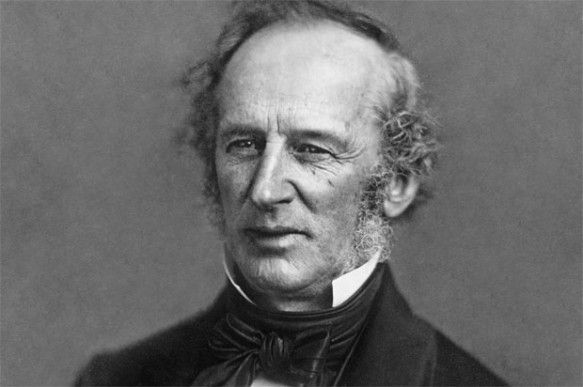
10. Cornelius Vanderbilt – $185 Billion

10
Cornelius Vanderbilt, also known as Commodore, was an American-born philanthropist and industrialist. He was the Vanderbilt family’s patriarch, which is one of the richest families in the entire history of America. Vanderbilt is also Anderson Cooper’s (of CNN) great-great-great-grandfather. He is known for being the third wealthiest American to have ever lived, with assets amounting to $185 billion. His wealth came from different sources, first from steamboats then later on from shipping. He became even wealthier after he made a big move and invested in railroads.

9. Henry Ford – $199 Billion

9
Born on the 30th of July, 1863 in Greenfield Township, Michigan, Henry Ford was an industrialist who founded the Ford Motor Company. While Ford was not the person responsible for inventing the automobile, he was the one who developed, manufactured, and came out with the first ever vehicle that Americans belonging in the middle-class range were able to afford. He introduced the Model T Automobile, which revolutionized the American automobile industry, eventually improving the means of transportation in the United States. At the time of his death, which was on April 7, 1947, 83 year old Henry Ford had a net worth amounting to around $199 billion in today’s value.

8. Muammar Gaddafi – $200 Billion

8
Muammar Gaddafi, born Muammar Muhammad Abu Minyar al-Gaddafi and also more popularly known as Colonel Gaddafi, was a politician and revolutionary who ruled the country of Libya for more than 4 decades. He became the Libyan Arab Republic’s Revolutionary Chairman after he was able to take power in the coup d’etat that took place in 1969. At the time of Muammar Gaddafi’s death, he had an equivalent net worth of around $200 billion.

7. William the Conqueror – $229.5 Billion

William The Conquerer
William the Conqueror, also known as William I and William the Bastard, was England’s first Norman King. He was also a descendant of the Viking raiders. He reigned for more than 20 years, starting from 1066 until he died in 1087. He built his wealth from taking and reigning over kingdoms. When he died in 1087, he passed his riches over to his sons, which in today’s money, is equivalent to $229.5 billion.

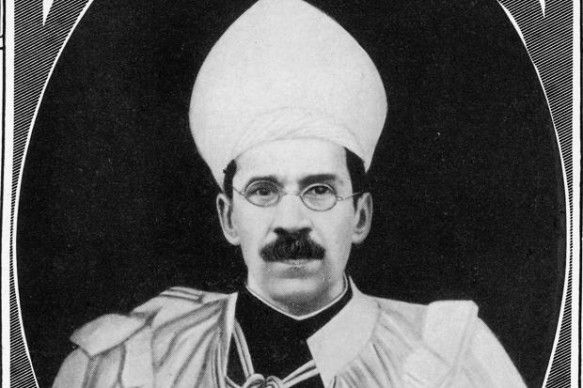
6. Osman Ali Khan, Asaff Jah VII – $236 Billion

6
Osman Ali Khan, Assaf Jah VII, born Mir Osman Ali Khan Siddiqi Bahadur, was the last ruler and leader of the Princely State of Hyderabad and Berar. He reigned over Hyderabad for 37 years, starting from 1911 to 1948. His leadership only ended when Hyderabad became a part of India. When he was still alive, he was considered to be the world’s richest man. He owned a collection of gold that amounted to more than $100 million. He also had jewels worth more than $400 million, with the Jacob Diamond included in his possessions. Today, these jewels are worth $95 million. Rumors say that the former leader had in possession more than 50 different Rolls-Royces. With today’s inflation, his total assets would amount to $236 billion.

5. Tsar Nicholas II – $300 Billion

5
Tsar Nicholas II came into power after his father, Alexander III, died on the 20th of October, 1894 from liver disease. Nicholas was then 26 years old. Saint Nicholas the Martyr and Saint Nicholas the Passion-Bearer are just some of his known sobriquets. He was in power for more than 20 years. Known also as the last emperor, Tsar Nicholas II’s assets, taking into consideration today’s inflation, would be worth $300 billion.

4. Andrew Carnegie – $310 Billion

4
Born on November 25, 1835 in Dunfermline, Scotland, Andrew Carnegie was an industrialist who played a major role in the expansion and the growth of the American steel market and industry. The Scottish-American industrialist was also a high profile philanthropist during his time. Before he began collecting money, he started out as a telegrapher first. It was only in the 1960′s when he started making investments in railroad sleeping cars, oil derricks, and bridges. Taking into account today’s inflation rates, Andrew Carnegie’s total assets would be worth around $310 billion.

3. John D. Rockefeller – $340 Billion

3
John D. Rockefeller, or John Davison Rockefeller, was a U.S.-born philanthropist and industrialist. He founded the Standard Oil Company, which was the leader in the oil industry during his time. This company that he established was also the first ever U.S. business trust. Rockefeller was known for having revolutionized the petroleum industry. All in all, with his total assets amounting to $340 billion after taking into consideration today’s inflation, he was the richest American to have ever lived. Aside from this, John D. Rockefeller was also the first U.S.-born man to have a net worth of more than $1 billion.

2. The Rothschild Family – $350 Billion

House Of Rothschild
The Rothschild Family, also commonly referred to as the Rothschilds, originated in Frankfurt, Germany. The family established a banking dynasty back in the 1760’s. This surpassed even the most powerful families of the same era, such as the Berenberg and the Baring. Today, they are considered to be the richest people in the world. Their total assets amount to $350 billion. Many believe that the Rothschild Family controls more than $1 trillion in banking and real estate assets.

1. Mansa Musa I – $400 Billion

Mansa Musa (cover)
The tenth Mansa, (which means King of Kings) Mansa Musa I leads the pack of the richest people who have ever lived. This Malian Empire ruler made his fortune by producing salt and gold, which accounts for over 50% of the world’s supply. Taking into consideration the inflation rate, Mansa Musa I would be worth around $400 billion.

Andy Murray plays down potential for Lendl-Becker fireworks

Andy Murray plays down potential for Lendl-Becker fireworks
Long-time enemies on the court, Lendl and Becker will each be coaching two of the world's top players - Lendl, of the Czech Republic, has been Murray's mentor since late 2011, while Germany\'s Becker is set to join the camp of world No.2 Novak Djokovic as head coach in 2014.
The Lendl-Becker relationship was often frosty during their playing days before thawing after both retired. Lendl held sway in their overall meetings, winning 12 matches to Becker's 10. The German, however, won all three of their Grand Slam final meetings.
The duo last faced off on the court 20 years ago, and Murray, of Scotland, told Dubai-based newspaper Gulf News relations will be civil if they cross paths as coaches.
'I personally don't think there will be renewal of a rivalry. I mean, no matter if you are coaching the players, you can't influence much,' he said.
'Once you step on court, the coaches can do very little to the outcome of a match. It is the preparation where the coaches can make a really good difference. We will have to see how it goes from here.'
Murray, 26, finished fourth in the end-of-year rankings, having won the Wimbledon title in 2013 - his second Grand Slam trophy. Lendl played a key role in that feat, and Murray has subsequently seen Becker link up with Djokovic and former world No.1 Roger Federer turn to another champion from that era in Stefan Edberg.
Murray is unsure, however, if it represents any kind of trend.
'Obviously, everyone wants to keep working on every game. It is good to see great players like Novak get some help from Becker who has been there and done it before,' he said.
'I don't know if it is a trend starting here or not. For that, we will have to wait and see for few years.'

NFL Cowboys owner Jones still hoping Romo plays

NFL Cowboys owner Jones still hoping Romo plays
Dallas owner Jerry Jones still hopes Tony Romo will lead the Cowboys in a do-or-die NFL clash with Philadelphia,with the quarterback reportedly receiving an epidural injection to combat back pain.
The Cowboys host the Eagles in the final game of the regular season on Sunday with the winners claiming the NFC East division title and an NFL playoff berth.
In his weekly radio show on Tuesday, Jones said backup quarterback Kyle Orton -- who hasn't started a game since 2011 -- would be ready to play if necessary, but that Romo would play if doctors agree.
'Pain won't stop him.,' Jones said. 'Pain as a symptom of something that a doctor might say we don't advise him to play, that's different.'
Jones declined to give details of Romo's injury. ESPN.com reported that the Cowboys signal-caller has a herniated disk in his lower back and received an epidural injection to relieve pain and inflammation.
Romo's back was clearly troubling him as he rallied the Cowboys to a one-point victory over Washington on Sunday that kept Dallas' playoff hopes alive.
He was already limping when he threw a 10-yard touchdown pass to DeMarco Murray with 68 seconds left to lift the Cowboys to a 24-23 victory over the Redskins

Nets’ Pierce fined $15,000

Nets’ Pierce fined $15,000
Brooklyn forward Paul Pierce was handed a $15,000 fine by the NBA on Tuesday, a day after he was thrown out of the Nets' blowout loss to Indiana.
The NBA veteran was ejected from the contest and charged with a flagrant foul 2 with 4:22 remaining in the third quarter after clashing with Pacers point guard George Hill.
Hill was racing toward the basket on a fast break when Pierce caught him on the neck with his left arm, sending Hill crashing to the court.
NBA president of basketball operations Rod Thorn said Pierce had been fined 'for making excessive and unnecessary contact with George Hill of the Indiana Pacers.'
Pierce didn't score a point in the game, just the second time in 1,123 games that the 16-year veteran was held scoreless and the first time since March 1999 when he was an NBA rookie

Is Europe sacrificing its consumer standards?

Is Europe sacrificing its consumer standards?
Both sides appeared pleased when the third round of negotiations for the world’s biggest free trade zone, the Transatlantic Trade and Investment Partnership (TTIP), which wrapped up in Washington D.C. last week. Delegates from the United States and Europe convened here in July this year to begin negotiations, and met again last week to resume talks.
Twenty-four working groups dealt with the complex issues of financial services, investments, labor laws, and regulations. The talks showed that both sides were particularly interested in the automobile industry, as well as chemicals, pharmaceuticals, and telecommunication technologies.
'The US and the EU agreed that they need to be able to develop regulations without compromising the level of protection,' the European Union's chief negotiator Ignacio Garcia Bercero told DW. This, he said, hadn't been clear in the second round of negotiations.
Difficulties remain when it comes to regulating financial services. The German conditions are too weak for the Americans, who don't want financial services included in the negotiations at all. 'We think it would be paradoxical to create a strong agreement to enhance cooperation between European and American regulators and and a sector like financial services is critical,' said Bercero.
The EU negotiators are interested in reaching an agreement for the energy and commodities trade. 'It is extremely important for us to get a clear guarantee that US exports of gas and oil will be guaranteed to the European Union,' he said. At this stage Bercero didn't want to comment on the outcome of the negotiations.
Growth, investment and employment
This is no surprise for William Frenzel, former congressman and member of the Brookings Institution think tank in Washington. 'The two gladiators are feeling each other out and seeing what each one needs and how deeply they feel those needs,' he said. Especially in such trade treaties nothing is really decided until the end. 'If you put too many things out there as being accomplished, I think you may get some surprises in the end,' said Frenzel. 'Because in the end you may have to trade one of those off to get something else you want more.'
Both sides expect more growth, investments, and jobs from the partnership. Already low tariffs will be removed. Standards and licensing procedures will be unified. There will be standardized plugs for electric cars, for instance. According to the Munich economic think tank IFO, the treaty will create up to 110,000 new jobs in Germany alone, and up to 400,000 jobs in Europe.
Both sides hope the partnerships will set global standards, and keep emerging economies like China, Brazil, and India at bay. In terms of the European debt crisis, there was some cause for joy in the expected 0.5 percent increase of the European GDP.
Europe and the US already generate more than half of the global economic output and they are already each other's most important trade partners.
Chlorine-washed chicken
Some non-tariff obstacles are also to be removed to further increase trade between the US and Europe, including consumer and environmental protection standards and food legislation. Critics fear that Europe will sacrifice its high standards, though as the third round of talks came to a close, negotiators claimed this wouldn't be the case.
Lori Wallach, lawyer and director of the Global Trade Watch at Public Citizen, the world's biggest consumer organization, has observed trade negotiations since the 1990s. She is not against trade treaties in principle - common standards, for instance, can mean that products don't need be checked twice. But she says the TTIP's negotiations are not based on the highest standards, but the lowest. Under the new agreement, chlorine-washed chickens and genetically-modified food could be sold in Germany without labelling.
'The agenda for this negotiation really has been set by the largest US and EU corporations. It's very clear that this is an agreement about making them more profitable, about making it easier for them to operate under one standard, the lower standard. And that is not in the national interest, that's not in the public interest. That is not a benefit for most of us,' said Wallach.
Wallach also criticizes the establishment of courts of arbitration, known as the investor-state dispute settlement (ISDS), where companies can take action against countries if the companies fear for their investments. These courts are meant to provide security for companies that invest in developing countries without reliable legal systems, not in places where such systems are already in place, such as the US and Europe.
According to Wallach, another problem is that once the treaty is signed, not a single word can be changed if all partners do not agree. 'So it locks into place a system of policies that may or may not suit the needs of the people living with the results,' she said.
Results in 2014?
Chief EU negotiator Karel de Gucht and his American counterpart Michael Froman will draw their initial conclusions at the beginning of 2014 in Brussels and meet with different lobby groups. The next round of negotiations is planned for March.
Wallach and Frenzel think that the ambitious goal signing a deal by the end of 2014 is unrealistic. Not only do ,any issues unrelated to trade also jeopardize the treaty, but the US Congress, the EU Parliament and all 28 EU member states have to agree to it.

Wall Street’s rental empire – the next subprimes?

Wall Street’s rental empire – the next subprimes?
Bad mortgages sparked the 2008 financial crisis in the US and set off a devastating economic crisis in Europe. But what if bad rental contracts did the same - and triggered something even worse? That's what some analysts have concluded in a report by US magazine The Nation on a new business model being developed by private equity firms.
The magazine spotted that Wall Street hedge funds have gathered a huge wealth of property across the US, buying up thousands of the houses foreclosed as a result of the subprime mortgage crisis. The plan is to rent these properties back out - in many cases to some of the same 10 million people who lost them in the crisis.
The firm thought to be dominating this new model is the Blackstone Group, the biggest private equity firm in the world, which has scooped up thousands of such cheap properties often through bulk purchases from the banks themselves. According to the Nation, Blackstone subsidiary Invitation Homes spent $7.5 billion (5.5 billion euros), buying up 40,000 homes in the US at a rate of $100 million a week between October 2012 and November 2013.
Blackstone houses
As a result, Blackstone is now the biggest owner of single-family rental accommodation in the US. And, fittingly, the new business plan is being financed by many of the banks currently contesting lawsuits resulting from the mortgage crisis, including JPMorgan Chase, Citigroup, Morgan Stanley, and Germany's largest bank, Deutsche Bank, which arranged a $3.6 billion credit line so Blackstone could front the cash for the property.
The plan is to securitize - or bundle - rental payments in the same way that mortgage payments were bound up and sold to investors before 2007. When DW contacted him, a Blackstone spokesman in Europe would not respond on the record to the Nation's article, but pointed out that the issue had been raised before - A New York Times editorial published in June this year said Blackstone's new strategy was driving up house prices, thus creating the prospect of another housing bubble.
In response, Blackstone published a blog post claiming that Invitation Homes was only a minor player in the US housing market. 'Blackstone is not buying houses in sufficient numbers to make an overall difference in house prices,' the blog said. 'Blackstone, through its subsidiary Invitation Homes has bought 29,000 homes, representing three hundredths of one percent of all US housing (out of 115 million total units).'
In any case, 'foreclosed homes are usually abandoned and a blight on the neighborhood, contributing to a downward spiral of home prices,' the post continued. 'Cleaning and fixing up these houses and putting in stable long term renters improves neighborhoods and the value of everyone's home.'
Effect on Europe?
In the meantime, Blackstone appears to be launching the same strategy in Europe - specifically in Spain, a country whose property market was hit hard by the European crisis. Bloomberg reported that the firm agreed in July to buy 18 apartment buildings from the city of Madrid for 125.5 million euros. Anthony Myers, Blackstone's senior managing director of real estate at Blackstone, told a conference in Barcelona in mid-October, 'When we looked at the situation in Spain, we thought we could see something similar, where we could replicate a lot of the systems and technology that we created in the US.'
Economists in Europe are relatively relaxed about the new development. 'The model doesn't seem to be as risky as five years ago,' said Ralph Henger, real estate specialist at the Cologne Institute for Economic Research (IW). 'The rents shouldn't rise as quickly as the interest payments on mortgages did in those days. They could rise, but within limits, so the families can service them.'
Zsolt Darvas, economist at Brussel's based think tank Bruegel, is also not convinced that this is a major threat. 'The risk inherent in mortgage-backed securities was much larger in my view, because these securities were issued on the belief that house prices will increase forever,' he told DW. 'The risk inherent in rental income is much lower: in the event of a major crash in housing markets some tenants may not be able to pay for their rent, but then the rents could simply be reduced, leading to lower income, though not necessarily to a complete collapse of the security.'
Darvas also thinks that Blackstone's plan shouldn't simply be condemned outright because of the involvement of Wall Street hedge funds. 'True, 'Wall Street people' have major responsibility for causing the crisis and the suffering of millions,' he said. 'But would it be better if (in the absence of Blackstone and other buying) prices would fall further? That would hurt even more.'
Paying over the odds
On the other hand, equity firms like Blackstone clearly have more interest in turning a profit than they do in creating affordable housing - in other words, their investments are also a bet that the market value of the properties will rise. And they are rising already in Spain - because of the bidding wars between major institutions. Goldman Sachs and Madrid-based private equity firm Azora Capital outbid Blackstone in August by paying almost 20 percent above the asking price for 32 social housing developments sold by the capital's regional government.
Darvas welcomes the fact that there are buyers. 'This indicates that prices have likely bottomed out, and there is demand, which may increase prices, which would be good for everyone: current homeowner, banks, investors,' he said.
But that is not to say that there aren't dangers. 'The decisive point is what Blackstone's strategy is,' Henger told DW. 'If they want to dominate the market and drive up rent, so the tenants could be unable to pay, and then have to move out, in which case it is dangerous.'
This does seem to be happening in the US. According to the Nation, Blackstone has filed eviction proceedings against 10 percent of its tenants in Charlotte, North Carolina, alone, apparently under pressure from investors to make sure that the monthly rent payments are made.
Given that they are already paying over the odds for these properties, it seems unlikely that they will be happy to keep rents low. 'The interesting question is - do they want to do this again?' said Henger. 'So for one or two years the rent is fixed, and then it'll be 30 percent higher. Then there would be a risk there. In short: are these subprime products or not?'
Henger concludes that one could welcome the implication that these property markets have hit bottom, and an investor has appeared to rejuvenate the market. 'Fundamentally, there is little to criticize,' he said. 'If Blackstone's strategy is just to go in now, simply to buy, not to provide any construction investment, wait for the prices to rise, and then sell it all off in five years' time, then that is unsustainable and one can seriously condemn it, and it is dangerous. But I don't know what the strategy is.'
Blackstone, for their part, are saying nothing about their intentions.