Sunday, 17 November 2013

Royal Mail privatisation: bankers to face select committee

Royal Mail postbox
Floating away … Royal Mail shares jumped 38% on the first day of trading. Photograph: Andy Rain/EPA
The flotation of Royal Mail will come under renewed scrutiny this week when MPs question some of the City's top investment bankers about the valuation placed on the company.
At Wednesday's session of the business, innovation and skills (BIS) select committee, MPs will quiz top advisers from Goldman Sachs andUBS, the investment banks that ran Royal Mail's flotation last month.
They will also hear from representatives of JP Morgan, Citi and Deutsche Bank – three City firms that missed out on running the share sale – and Panmure Gordon, a broker that was scathing about what it said was the undervaluation of Royal Mail.
The price for the flotation was set at 330p a share – at the top of the original range and valuing Royal Mail at £3.3bn. But the shares jumped 38% on the first day of trading and closed on Friday at 560p, giving the company a market value of £5.57bn.
Adrian Bailey, the Labour MP who chairs the committee, said: "I think the committee collectively realises that the difference between the float price and the current price is an area that requires questions and is potentially embarrassing to the government.
"What we are trying to find out is exactly how the government arrived at the valuation it did and, given that the valuation was way out from the current trading price, what lessons can be learned for any future privatisations."
Panmure Gordon argued before the shares started trading that the business was really worth up to £4.5bn. Gert Zonneveld, Panmure's joint head of research, said he was certain the government had got the price wrong and had sold Royal Mail on the cheap.
At the end of the first day of trading, the company was valued at £4.55bn – a shade over the upper end of Zonneveld's pre-float estimate. Armed with more information after the initial public offering, Zonneveld said there was potential for further price rises and slapped a 529p price target on Royal Mail, which would value the company at £5.3bn.
At his last appearance before the BIS committee, two days before the flotation, Vince Cable, the business secretary, described the Panmure valuation as an "outlier" and dismissed the likely jump in the share price as "froth". But it then emerged that in its failed pitch to run the prized IPO, JP Morgan had told the government that Royal Mail could be worth £10bn including its £800m debt.
JP Morgan's representative, John Mayne, is likely to be asked whether this revelation was "sour grapes", as Bailey put it. The bank declined to comment ahead of the session.
Katy Clark, a Labour member of the committee, said: "We want to hear what officials were told. What was the basis on which the advice was provided – and if the asset was worth a huge amount more, was that information given to the secretary of state and why wasn't it proceeded on?"
The grilling has wider implications for the advising banks and the government. There are rumblings that Goldman and UBS should go without some of their fees if it is found they got the valuation wrong. So far the underwriters have received £12.7m but a further £4.2m will be paid at the government's discretion.
Bailey said: "Questions need to be asked about the criteria used to qualify for the deferred payment."
Members of the committee will also want to know how sell-offs of state assets can be improved, including that of taxpayers' 81% stake in Royal Bank of Scotland.
Next week, Cable and his ministerial colleague Michael Fallon will appear in front of the committee. He will be joined by a banker from Lazard, the institution that vetted the flotation price.
The pricing of the flotation will be the main subject of discussion on Wednesday but MPs will also quiz Goldman and UBS on how the shares were distributed, amid reports of disgruntlement among UK pension funds over a perceived bias towards sovereign wealth funds.
In a letter to the committee after the flotation, Cable said the government considered increasing the offer price beyond the stated 330p. He said that Goldman, UBS and Lazard advised against this because long-term investors opposed to the move would have withdrawn support and it was hard to judge what the result would be for the IPO.
Friends of Fallon said that, having committed the government to selling shares directly to the public, the government needed the shares to rise once trading began to avoid upsetting thousands of potential voters. Top fund managers would also have been furious if the shares had fallen.
Pricing a company for flotation is as much an art as it is a science – an observation that might well form an element of the bankers' defence on Wednesday.

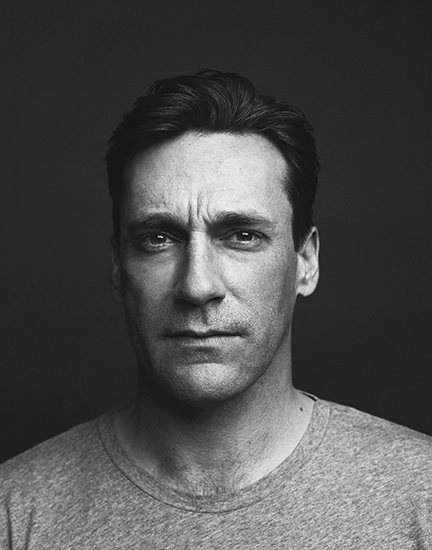
Jon Hamm interview: 'Don Draper is dismal and despicable'

hammView larger picture
John Hamm photographed in Los Angeles: ‘Mad Men has been a solid 25 per cent of my existence on the planet. But that’s enough.’ Photograph: Wesley Mann/August
'I think we should all," Jon Hamm suggests, "get a chance to spend a week or two back in the shoes of our 24-year-old self…" Hamm, straight-jawed star of Mad Men, is talking in his rich bass voice about the premise of A Young Doctor's Notebook, an inspired adaptation of Mikhail Bulgakov's autobiographical tales of his apprenticeship as a doctor in rural Russia in 1916. In the drama, now entering its second series on Sky Arts, Hamm plays the middle-aged writer, looking back on the bleakly comic, steppe-back-in-time world of his youth, through the person ofDaniel Radcliffe. The pair – the morphine-addicted 42-year-old dissident, and the naive 24-year-old medic – get to compare notes periodically, a set-up which among other things allowed the perfectly surreal spectacle at one point in the first, four-part series, of Don Draper sharing an antique copper bath with Harry Potter.
The adaptation was Hamm's idea, and he was instrumental in getting Radcliffe, who is a full foot shorter than him, as his innocent mini-me. With a passing facial resemblance, they make a likeable deadpan double act, one in which even the height difference feels right: "You think of your younger self as smaller and less worldly and more prone to making mistakes," Hamm says, "and anyway we are not dealing with realism here. You buy into it because neither can you talk to your older self in the bathtub." The harder challenge of the series lies in its delicate, mordant tone, which shifts quickly from shop of horrors medical emergency, to poignant reminiscence, to escapist slapstick. ThinkM*A*S*H meets Chekhov. Hamm is often faced with the challenge of conveying all those registers at once in his advice to the flailing, amputating, Radcliffe: "You just might have to settle for saving the world three-quarters of a peasant at a time," he will say.
hamm and danJon Hamm and Daniel Radcliffe in A Young Doctor's Notebook. Photograph: Sky Arts
"We didn't want it to be some dry historical drama," Hamm suggests, "but nor did we want to it to be a David Lynch artsy thing." We are talking after a day's shooting, in a deserted canteen at the show's studio in Twickenham. Hamm read, he says, a lot of Russian literature back when he was a student in Texas, "from Tolstoy to Solzhenitsyn", and came away from most of it thinking primarily: "Wow! Russia is a very different place from the midwest." You could, he says, just about imagine yourself there, but not that easily. He wanted the series to carry that alien sense, "a bit like how Americans feel about Downton Abbey".
He'd met Radcliffe at various awards ceremonies and parties. (It was a bonus that the Harry Potter star turned out to be an ardent fan of Bulgakov's The Master and Margarita.) "A couple of my friends had worked with Dan. And I knew he would spark to it," Hamm says. "He is incredibly dedicated, and not afraid to slip and fall and make a fool of himself, which is everything you want in an actor. He is off working on stage in the evenings while we are doing this [in The Cripple of Inishmaan at the Noël Coward theatre in London's West End] So: the perfect crazy 24-year-old."
Link to video: Daniel Radcliffe and Jon Hamm discuss A Young Doctor's Notebook
The adaptation, is, among other things, I suggest, the ideal vehicle for the pair of them to be cast against their respective indelible types. Having spent six series as Don Draper, Hamm is beginning to imagine life without his impeccably tailored, semi-psychotic alter ego, who he will leave behind for good when series seven concludes in 2015. He doesn't see his current months off-set specifically as a holiday from Draper, he says, but he does go out of his way to find parts for himself where "he is not playing a philanderer" – though of course those are the parts that he mostly gets offered. "In that sense I am not unlike Mr Radcliffe. Our names tend to come with something attached – an audience and an expectation, and I guess a price tag. The challenge is to choose the right things to do."
The fascination with Hamm as an actor, one understood exactly by Mad Men creator Matthew Weiner, is that in all of his parts he appears to have arrived seamless and fully formed. The opening line of the first show of Mad Men asked the question "Who is Don Draper?" and those millions of "Maddicts" who have stuck with it are still obsessed by the answer.
Weiner imagined the Draper character as a Gatsby figure, the American archetype of the self-made hero with the tragic flaw. When he auditioned Hamm, he saw immediately what he had been looking for: an old-style Hollywood leading man, a Cary Grant or a Gregory Peck, an iconic adult male, but one who might convey both an intellect and a kind of emptiness, an emotional space to be filled. When Hamm left the room after his first audition, Weiner famously turned to his casting director and said, with certainty, "That man was not raised by his parents." Even now, off-duty, in a sweatshirt, and nursing a cold, he carries something of that quality about him; he is open and charming and quick to laugh, but also unfathomably self-contained in some way. If, I ask him at one point, he was in a bath with his own 24-year-old self, what would he be telling him?
don and meganJon Hamm as Don Draper, with Jessica Pare as his wife, Megan. Photograph: AP/AMC
Hamm smiles at the idea. "I'd be telling him, just work harder. I had been doing plays back then. At 24, I'd just come to Los Angeles." He'd arrived in his beaten-up Toyota, with about 100 dollars stuffed into his jeans pocket, all his worldly goods. "When you think of yourself in your 20s you tend to obscure some of the worst memories and inflate some of the good parts," he says. "If I think back to my first couple of months as a professional actor, I cringe: I was such an idiot. In film and television there are so many customs that you don't know about. You just blunder in."
By 24, Hamm had done a great deal of enforced growing up. Born in St Louis, Missouri, he was two when his parents divorced; he lived with his mother and saw his father at the weekend. His mother had moved to St Louis from a small town in Kansas at 18 to work as a secretary. She met and married Dan Hamm, an older widower who already had two daughters. Hamm's father weighed more than 20 stone and was nicknamed "the whale" on account of his gargantuan personality as well as his girth. After his haulage business failed he sold cars, and tried his hand at advertising. When Hamm was 10 his mother died quite suddenly of stomach cancer. He was given a book, How to Deal with the Death of a Parent, and he moved into a house that his father shared with his own mother.
It was not a happy home, and Hamm escaped into sport – he was a serious baseball player – and increasingly into the theatre. He won a scholarship to Texas University. During his first term, his grandmother died, and during his second, on New Year's Day 1991, his father, who suffered from diabetes, also passed away. Hamm was 20, and, I imagine, suddenly profoundly rootless?
"Not rootless," he says, "but certainly not rooted. If you are in that situation you tend to cling on to people and cling on to things. For a few years I lived in a bunch of basements and on a bunch of couches, and had a lot of surrogate families around St Louis and Columbia, Missouri. A lot of those people are still in my life and that is a nice thing to have. It's maybe the occasional email – I don't do Facebook or Twitter or any of that shit – rather than a face-to-face meeting, but I keep up with people."
The cliche is that acting provides a family, and Hamm is not going to argue.
"We used to joke that the theatre department at college was where all the orphans ended up," he says. "They had been kicked out of every other place, but they found a role, a place there, whether it was front of house, or on the stage. That doesn't mean it wasn't bitchy and catty and competitive at times – like any family. But it took all comers."
What was the moment, I wonder, when he knew for sure that was where he belonged?
"It really started at high school," he suggests, "when one of my teachers, who is still a good friend, took me on one side and said: 'You are really good at this.' I still have problems with compliments. But that was the first one, and I kept hearing that as I carried on. I never really heard it in any other arena, no one ever said you are a really good writer, or you are good at math. And, as you say, I later found myself unrooted. I had no immediate family, no wife, no particular place to live, so I thought I might as well give this life a try. I've learned a few things, but one is: you are only 24 once. You have to hustle a bit to get where you want to be."
For a long while, living initially with his aunt and uncle in LA and later with friends, Hamm did the rounds of audition and rejection. He kept working – albeit at one point briefly as a set designer on a soft-porn film. It was not until 2000, at 29, that he got his first TV part, in a forgettable series called Providence; and when Mad Men came around in 2007, he was still scratching around for regular work, by now the other half of Jennifer Westfeld who had given him a role in the 2001 hit comedy Kissing Jessica Stein which she had written, and in which she starred. Given that he had to wait for it, his stellar Mad Men years must still feel a bit like the most surprising of plot twists?
Jennifer Westfeldt and Jon HammJon Hamm with his wife, Jennifer Westfeldt, who says: 'People come up and say all sorts of wildly inappropriate things… It never gets any less weird. It's like being with a Beatle or something.' Photograph: Broadimage/Rex
"It is. I mean, the stated career objective was just to work and pay off my college loans. Anything else would be gravy. I never wanted to be Tom Cruise or whatever. I just wanted to work on things I liked and to avoid douchebags. Thankfully that's how it worked out."
All men measure themselves against their father to some degree. When he started out as Don Draper Hamm would apparently keep a picture of his larger-than-life old man on his wall. In one early Mad Men interview he remembered looking at himself in the mirror the first time he put on one of Draper's trademark suits. "I was sitting in my dressing room," he recalled, "running lines in the mirror, and I thought: Oh, my God! I look just like my father. He was just so fucking sad. Here's this guy that looks like he's got the whole package, but there"s nothing inside but sadness."
Does he still feel that ever-present absence?
"I do," he says. "I mean I lost my dad when I was 20, and I realise now I never really had any what you might call adult conversations with him. There was a lot unspoken. I never heard how he met my mum for example. Or any stories about his childhood or much of what he had done before I was around. I had my own experience of him, but a kid's experience of watching his father is not necessarily the reality. I can see a resemblance in myself to my father, although of course I hope I keep my hair and don't gain 200lbs and don't get diabetes. He was an interesting guy, but a sad guy. He lost the two women he loved. It was pretty tough."
Watching Mad Men over the years it has always felt that Hamm's own story is around the edges of Don's life, is he conscious of that?
"Yes. I think it's pretty close to the surface. I'm not shy about that. I think Matt Weiner and the writing staff have wisely mined that source for its dramatic motherlode so to speak."
Does he access that history when he is acting in certain scenes?
"No, I generally don't," he says. "I'm not that methody. I am very cognisant that I am playing a character. Don Draper is a pretty dismal, despicable guy, so why I would want to take him home with me I don't know... It's a strange thing. People tell me they look up to Don, like they look up to Tony Soprano or Walter White [in Breaking Bad]. People have these weird fascinations with people who in reality you would not want to be for a second. There seems to be that vicarious thrill. Maybe it is the fact of doing everything wrong and getting away with it."
Perhaps because of his childhood awareness of how badly things can go wrong in life, perhaps because of his proximity to Don Draper, Hamm has led an apparently blameless Hollywood existence, even since his alpha male fame. I interviewed Jennifer Westfeldt, his partner of 15 years, at the time her latest film, Friends With Kids, came out, and she spoke then of the disconcerting reality of being out and about with Hamm in recent years. "The hardest bit for people," she said, "is that Don Draper is such an iconic character that fans of the show have a really hard time imagining Jon is not like that. That he is really this goofball. And that he is in this long relationship. That is, I guess, why people come up and say all sorts of wildly inappropriate things to him, and me, which don't bear repeating. It never gets any less weird. It's like being with a Beatle or something."
Hamm routinely fares well in sexiest/best-dressed male lists in both straight and gay publications. Along with his multitude of Emmys, he is indisputably GQ's man of the year, every year. Is that something he enjoys?
"Well, it is and it isn't a good thing. If you are a guy who needs that kind of validation, more power to you. I'm not a guy who needs that. I find most of it silly. You can ask anyone who knows me if I walk around as cock of the walk, and I'd be amazed if anyone said that was the case. That kind of culture should be the preserve of teenage girls, and if you ask any 16-year-old girl, she'll say I remind her of her dad. You know, I am a 42-year-old guy in a world in which Ryan Gosling exists…"
A comparative escape from some of that kind of attention is among the reasons Hamm enjoys working in Britain. He came here first as a chaperone for a theatre group from his old high school, his first trip abroad, aged 21. And though it was, he suggests, "a truly terrible idea to put me in charge of 20 13- to 17-year-olds, I anyhow fell in love with England, Stonehenge and Bath and Oxford and all that. I still love being here – the way it is based around walking and biking. I can wander around quite happily in London. I am kind of out of context. And unless it is late and they are shitfaced most Brits are too polite to hassle me."
Westfeldt is in New York, starring in a play. Hamm spent the summer in India, and in Atlanta, working on a Disney film about a baseball agent trying to hire cricket stars, so they have not seen much of each other. "It's the usual story," he says, a reality which means among other things they have never felt the time right to have children (the mostly comic subject of Westfeldt's last film, in which Hamm also starred). When I asked Westfeldt about her thoughts on a family she said: "I think kids should have something grounded. Jon and I are both children of divorce. I'm not sure we can do it without a proper home base." He agrees, suggesting St Louis would be a better place to raise children than either New York or LA, but that for them to move there would be like "a Texan oilman moving to Hawaii".
So it's not on the horizon? "It is not imminent, let's put it that way." And Hamm has no plans to slow down in his career any time soon. At one point in our conversation, we talk about actors' lives he admires.
"I have no idea how Tom Cruise, say, can still be credible as an action hero, but he is," he suggests. "That is crazy. I mean I have met him and he is a very intense guy: if there is one person on the planet who can carry that off for three decades it is probably him. But a guy like Jeff Bridges would be more my hero. He lives in Montecito, hangs out, and occasionally comes forward to do something great. I met him when he was nominated for an Academy Award for True Grit and I was totally starstruck, like a gibbering idiot, barely able to shake his hand."
While I imagine for a moment Hamm tongue-tied in a tuxedo, I wonder if he has given much thought to Don Draper's eventual demise. Having lived with him so long is it something he would like a say in?
"Well, it hasn't been written yet," he says. "But I have every possible faith in Matt [Weiner]. We have a meeting before every season starts and we sit and talk for an hour or two, not about specific things. Just chatting about what we did on holiday, what art we have seen, about sports or getting older or whatever. Just stuff that is on my mind. And he will write a bunch of things down from that conversation. I have no idea at all what the process is after that."
Having known intimately the loss of one family, I wonder how he will cope with losing the surrogates in Mad Men? Can he conceive of life without them?
"I hope so," he says. "It has been a long stretch. If you look back at Don and Betty in series one, and how young the kids were, and how much more hair I had, you get a real sense of life passing; it's a bit like one of those Russian novels in that way. It has been a solid 25 per cent of my existence on the planet. But that's enough, I think." Hamm smiles his broad Don Draper grin.
"Will it be sad? Absolutely. I have made a lot of very close friends on the show. You know, I am feeling pretty zen about it just now, but probably next year I will be crying my eyes out."
A Young Doctors' Notebook series 2 starts on Sky Arts 1 on Thursday, 9pm

Hamm truths

1971 Born in St Louis, Missouri. Parents separate when he is two.
1981 Following the death of his mother when he is 10, Hamm moves in with his father.
1987 Plays Judas in a high school production of Godspell.
1991 His father dies and he returns to Missouri, leaving university in Texas; continues to appear in amateur theatre productions.
1995 Moves to Los Angeles, but fails to find acting work for three years.
1997 Begins relationship with actress and screenwriter Jennifer Westfeldt.
2000 Lands role on NBC drama Providence. Makes big-screen debut in Clint Eastwood's Space Cowboys.
2001 Acts with Westfeldt in her film Kissing Jessica Stein.
2007 Is cast as Don Draper in Mad Men, winning a Golden Globe award for his performance the following year.
2010 Stars in Ben Affleck's The Town, and appears with James Franco inHowl. Named GQ's International Man of the Year.
2011 Produces and acts in Westfeldt's directorial debut, Friends With Kids.
2013 Stars alongside Daniel Radcliffe in the first series of A Young Doctor's Notebook. Leah Harper

Andre Ward wins comeback fight against Edwin Rodriguez

Andre Ward
Andre Ward (left) beat Edwin Rodriguez on points. Photograph: Harry How/Getty Images
Andre Ward put over a year of inactivity behind him to win a unanimous points decision over Edwin Rodriguez in a non-title super middleweight fight in California.
Ward, the WBA champion who did not have to put the title on the line after his Dominican opponent failed to make the weight, took the contest 118-106, 117-107, 116-108 on the scorecards of the three judges.
A shoulder muscle tear and surgery had kept Ward out of the ring for 14 months but he showed no ill effects as he dominated from the opening bell and even survived a fourth round bout of wrestling which saw both fighters deducted two points.
Ward took the opening round despite Rodriguez running at him from the bell, trying to get inside and make things uncomfortable.
Ward landed a jab early in round two and managed to avoid his opponent's tactics, which kept referee Jack Reiss busy, to score with a huge left hook.
There was no sign of Ward being ring rusty despite his lay-off and his work-rate had his opponent well behind after the first three rounds.
In the fourth round Reiss had to intervene as the brawling continued and when the fighters failed to break he took two points away from each of them.
Ward responded to the warning with a big right hand to make it four rounds in a row. Rodriguez finally landed a good shot in round five but Ward again took the honours.
Ward kept up the accuracy to claim round six and then made good use of his left jab to add round seven. 
Rounds eight and nine went the same way with Ward still dominating and a massive left saw him also take the 10th.
The 11th also went to Ward and his domination continued in the final round for an easy points win.

Usain Bolt claims World Anti-doping Agency could scupper sponsorship

Usain Bolt
Usain Bolt claims misinformation given by the World Anti-doping Agency cost him a lucrative sponsorship deal. Photograph: Imago / Barcroft Media
Usain Bolt has claimed the World Anti-Doping Agency's high-profile investigation into Jamaica could cost him a lucrative sponsorship deal because the potential sponsor wrongly believes Wada's warnings that the island could be thrown out of the 2016 Olympics.
But Bolt, speaking after being named the International Association ofAthletics Federations male athlete of the year, said he would not be following his compatriot Shelly-Ann Fraser-Pryce – who won the women's award – in going on strike if Jamaica's athletes are not better looked after by their federation. "It's hard for me to strike because it's my job," said Bolt. "Shelly-Ann, you're on your own with that."
Bolt, who lifted the IAAF athlete of the year award for the fifth time in six years on Saturday, acknowledged that "Jamaica has had some problems this season", but added "that is not part of my focus". Instead, he said misinformation from Wada had caused him "a lot of problems".
"I know we've been going through a lot when it comes to drug testing, Wada and the IAAF, but this is causing a lot of problems for me," he said. "When a sponsor came up to us and was saying 'we'd like to sponsor you'. They then used an agency that does background checks to figure out if it's viable to sponsor you and it came back that Wada had said I would not be eligible to run at the next Olympics. That information is not correct, so there are a lot of things that are going on with this drugs thing that I really feel they need to clarify because, for me, it's causing problems for me when it comes to making money from my sport.
"We really need to get this out of the way and move past this, get the rules down, get everything straight and get it down fast, because we need to move on," Bolt added. "In every sport there are drug scandals and problems, but people move past it. That's what we have to do because it's really costing me money now, and I'm not too happy about that."
The IAAF president, Lamine Diack, used the awards presentation to criticise Wada for mounting what he called a "ridiculous campaign" against Jamaica and Kenya. "It was like a campaign, with Wada trying to make a statement," he said. "It was ridiculous. They went to Jamaica and what did they find? Nothing. We have to be clear on that.
"We are doing our best in athletics. You will never have an athlete suspended for four years in football. Stop all this."
Diack's comments followed a Wada statement that appeared to suggest the Jamaica Anti-Doping Commission would be declared compliant after Wada's visit to the island to conduct an extraordinary audit this month. "Wada is satisfied that the minister [of sport] has accepted the practical suggestions it made and now looks forward to their full implementation in the coming weeks. These include ... an acknowledgement by the minister to undertake a legislative review of anti-doping law in Jamaica, along with the evaluation of Jadco's governance and management structure. The minister has indicated that an additional budgetary contribution of $8m Jamaican dollars [about £50,000] is to be made to Jadco to assist with these advances.
"The government of Jamaica has made a clear commitment to address any deficiencies that exist and to improve on the efficiency and efficacy of the anti-doping programme in Jamaica."
Mo Farah lost out to Bolt for the athlete of the year award, but his coach, Alberto Salazar, was named the IAAF coach of the year. Daley Thompson was also inducted into the IAAF Hall of Fame.
Farah was not in Monaco, but Salazar said his preparations for next year's London Marathon are going well. "As he moves to the marathon we have to change his form. Already, in four weeks, not so much bobbing – he is already more efficient," said Salazar, before joking: "We tried to make him a sprinter, now we are taking him back the other way. Mo tells me I have to make up my mind."

Kevin Pietersen set to join England's elite hundred club in Australia

Kevin Pietersen
Kevin Pietersen, here in the third Ashes Test at Old Trafford in August, will reach his hundredth Test cap in Australia this winter. Photograph: Tom Jenkins for the Guardian
Countless adjectives, not all of them complementary, have been coupled with Kevin Pietersen over the years but he has rarely been perceived as "durable". He does not really do mundanity. More often he provokes superlatives, which hail inimitable strokeplay or lament another monumental indiscretion. Seldom do we ponder the old pro Pietersen ploughing on.
Yet here he is in Brisbane on the threshold of his 100th Test cap, eight years after he skipped on to the turf at Lord's against Australia with that badger haircut, which he wisely chose to cull (without any protest from anyone) before too long. Since then he has never been dropped from England's Test team – for cricketing reasons, that is. He was omitted on disciplinary grounds in August 2012 and he has missed six Tests through injury (three against Australia in 2009, three against New Zealand earlier this year). The figures make him a dogged old trooper.
Admittedly the landmark has been slightly devalued in recent times. The volume of cricket is such that the goal of 100 appearances is far more attainable than it was. Around the corner there is Alastair Cook, still only 28 years of age, with 97 Test caps; Ian Bell has 93; Jimmy Anderson 87. All three can be expected to join the club.
It took Colin Cowdrey 14 years to get there, Geoff Boycott 17 and Alec Stewart 10. For Pietersen the trek has lasted a mere eight.
Cowdrey, Boycott and Stewart all marked the occasion by hitting a century. What price Pietersen emulating them at the Gabba?
So, barring the intervention of dodgy knees or texts over the next few days, Pietersen becomes No10 in the England 100 Test caps club. He has the highest batting average (48) of all of them; he has hit more centuries than any of them – until Cook joins him in a list that contains only one proper bowler (Ian Botham). And he shares first place with Boycott in his capacity to divide opinion of cricket fans, team-mates and journalists alike. There is probably a sliding scale of devotion among those three categories – with fans at the top.
There is no question that he belongs in this company. Forget the off-field shenanigans. At the crease Pietersen has been the most mesmerising England batsman of the past two decades. His best innings, the 158 at The Oval against Australia in 2005, his 149 against South Africa at Headingley in 2012 (even if it ultimately caused more trouble than it was worth) or his 186 in Mumbai late last year, all spring to mind. They were breathtaking affairs, during which he might lurch from early myopic groping to imperious splendour in the space of one shot.
Among England batsmen in living memory only Botham has had the gall to embark on such preposterous strokemaking as Pietersen (but Botham, unlike Pietersen, had the fallback position of being a world-class bowler, which therefore gave him licence). So Pietersen could be seen switch-hitting Muttiah Muralitharan for six in a Test match at Edgbaston – "the only place I could see myself hitting him for a boundary"; straight-driving Dale Steyn back over his head for six at Headingley; and flamingo-flicking Shane Warne through mid-wicket against the spin in Adelaide. These were the best bowlers of the era and he was truly content only while subduing them.
Now Pietersen is in the autumn of his career. The body is creaking. When he sets off for that first single it is not only the non-striker who looks on with trepidation; so does the physiotherapist. Often it takes longer for him to acclimatise at the crease. Yet to the Australians he surely remains the most coveted of England wickets in this series.
This is partly to do with his personality. Pietersen, it cannot be disguised, gets up noses more easily than the vast majority of cricketers. Opponents revel in his failure. But it is also to do with pragmatism. Look back at that list and only Andrew Strauss (with 47 wins in 100 matches) and Cowdrey (44 wins in 114) have experienced more Test victories than Pietersen (42 wins in 99). This is an infinitely superior record to Mike Atherton (31 in 115) or Graham Gooch and David Gower (32 in 118 and 117 matches respectively).
Pietersen has been a winner for the bulk of his Test career. The cynics may decide that he has been lucky to play in a good side. It may be nearer the truth to say that Pietersen's presence has been a major factor in the success of those England teams.

Lance Armstrong's promise to come clean 'a little late', says Usada chief

Lance Armstrong
Lance Armstrong told the BBC this week that he would testify with “100% transparency and honesty” if asked to appear at an inquiry. Photograph: Christophe Ena/AP
Lance Armstrong's promise to come clean about doping is "a little late", the head of the United States Anti-Doping Agency (Usada) said on Thursday, accusing the disgraced cyclist of trying to use events to "gain advantage".
Travis Tygart said Armstrong had been pushed into saying he would co-operate with a new inquiry into doping in cycling because of legal proceedings in the US.
"He is going for a deposition in the United States in November where he is going to go under oath in a lawsuit and have to answer questions and I think that he is now being forced essentially through that process [to come clean] and that he is trying to gain an advantage," Tygart told Reuters.
"It's a little late but we are still hopeful he will come and answer everything we have to ask him under oath but until he decides to do that, it is entirely premature to determine or speculate on any sort of reduction [of his life ban]."
Armstrong, who was stripped of his seven Tour de France titles for doping, told the BBC this week that he would testify with "100% transparency and honesty" if asked to appear at an inquiry.
Tygart, attending the World Conference on Doping in Sport, said the American had been given chances to tell his side of the story but had declined.
"We invited him to come in June 2012 at the same time as we invited other athletes guilty of doping. He was the only one of the 11 that refused our offer," he said.
"We attempted to meet again in December and in January and February this year and so far he's refused to come in and be truthful and answer all the questions under oath just like all the other athletes have done, so at this point we are going forward.
"We are hopeful that we'll get to the bottom of a deep culture of doping that took over the sport and give clean athletes final hope that they can compete successfully without having to use dangerous performance-enhancing drugs."
Cycling's governing body said only Usada could consider any reduction of Armstrong's life ban from the sport.
"Usada is the body that has sanctioned Armstrong and those [sanctions] have been accepted by the UCI and Wada [World Anti-Doping Agency]," said the UCI president, Brian Cookson.

Tears and cheers as Sachin Tendulkar makes last walk to pavilion

Fans pay tribute to Sachin Tendulkar
A priest leads tribute prayers for Sachin Tendulkar in Mumbai as the Indian cricketer played his last match. Photograph: Rajanish Kakade/AP
Sachin Tendulkar walked off the ground with tears in his eyes as his glittering 24-year-career came to an end on Saturday at his home ground of Wankhede Stadium.
Tendulkar embraced teammates, who tried to give him a guard of honour on his way out, but the most prolific batsman in international cricket history went quickly into the pavilion wiping away tears.
Tendulkar bowled a couple of overs on the final day of his career amid roaring applause, bowling both leg-spin and googly on the third day of the second test against the West Indies, which he declared last month would be his last game.
Tendulkar, who has already retired from limited overs internationals, had earlier in the game struck a neat 74 with 12 fours which comprised several of his trademark shots like the straight drive, cover drive and paddle-sweep.
That proved to be his last innings, as India wrapped up a comfortable win without the need for a second innings.
Tendulkar's wife Anjali was among those watching the "Little Master" in action.
"It's been an emotional one month for us starting from the day he announced his retirement," Anjali told the channel beaming the match live. "Sachin is very good at hiding his emotions so we don't really know what's going on in his mind."
Anjali said the retirement had not been planned for long.
"He had always said he would retire the day he felt he could not give his best and he just came up to me one day and said that the time had come for him to retire," she said.