Monday, 14 October 2013

Avoid divisions, chaos and sectarianism, urges Grand Mufti

Saudi's Grand Mufti Sheikh Abdul Aziz al-Sheikh. PHOTO: AFP
Saudi's Grand Mufti Sheikh Abdul Aziz al-Sheikh. PHOTO: AFPA Muslim pilgrim prays atop Mount Mercy on the plains of Arafat during the peak of the annual haj pilgrimage, near the holy city of Mecca early morning October 14, 2013. PHOTO: REUTERS
MOUNT ARAFAT: Some 1.5 million Muslim pilgrims thronged Mount Arafat in Saudi Arabia Monday for the high point of the annual hajj, praying for an end to disputes and bloodshed.
Helicopters hovered overhead and thousands of troops stood guard to organise roads flooded with men, women and children.
Chanting “Labaik Allahum Labaik” (I am responding to your call, God), many of them camped in small colourful tents and took shelter under trees to escape temperatures of around 40 degrees Celsius (104 Fahrenheit). Special sprinklers were set up to help cool the pilgrims.
In his annual sermon, top Saudi cleric Sheikh Abdulaziz al-Sheikh urged Muslims to avoid divisions, chaos and sectarianism, without explicitly speaking of the turmoil unleashed by the Arab Spring.
“Your nation is a trust with you. You must safeguard its security, stability and resources,” the cleric, who heads Saudi Arabia’s highest religious body, said in an address to the Muslim world.
“You should know that you are targeted by your enemy… who wants to spread chaos among you … It’s time to confront this.”
He did not speak specifically of Syria, where Sunni-led rebels backed by Saudi Arabia are at war with a regime led by Alawites — an offshoot of Shia Islam — and closely allied with Shia-dominated Iran and Hezbollah.
But the cleric recalled the Islamic prohibition of killing and aggression, while insisting there is “no salvation or happiness for the Muslim nation without adhering to the teachings of the religion.”
Attendance is sharply down from last year, due to fears linked to the MERS virus and to multi-billion-dollar expansion work at the Grand Mosque to almost double its capacity to around 2.2 million worshippers.
Governor of Makkah province and head of the central hajj committee Prince Khaled al-Faisal said 1.38 million pilgrims had arrived from outside of the kingdom while ony 117,000 hajj permits were issued for domestic pilgrims.
This puts the total number of pilgrims this year at almost 1.5 million, less than half of last year’s 3.2 million, after Riyadh slashed hajj quotas.
Prince Khaled told the official SPA news agency late Sunday that authorities had turned back 70,000 nationals and expatriates for not carrying legal permits and had arrested 38,000 others for performing the hajj without a permit.
Authorities have also seized as many as 138,000 vehicles for violating the hajj rules, and owners will be penalised, the prince said.
Saudi health authorities have stressed that no cases of the Middle East Respiratory Syndrome (MERS) virus have been detected so far this pilgrimage. The disease has killed 60 people worldwide, 51 of them in Saudi Arabia.
The pilgrims arrived at Arafat from nearby Mina where most of them spent the night following the traditions of the Prophet Mohammed, who performed the rituals 14 centuries ago.
They had moved to Mina on Sunday from the holy city of Makkah, home to the Grand Mosque, Islam’s holiest place of worship, which houses the cube-shaped Kaaba towards which all Muslims pray five times daily.
On reaching Arafat, they crowded onto the hill and the vast plain surrounding it to pray until sunset, when they are due to set off for Muzdalifah for a ritual on Monday symbolising the stoning of the devil.
“I will pray the whole day for God to improve the situation for Muslims worldwide and an end to disputes and bloodshed in Arab countries,” 61-year-old Algerian pensioner Saeed Dherari said.
“I hope that God will grace all Muslims with security and stability,” said 75-year-old Ahmad Khader, who hails from the southern Syrian province of Daraa.
“The regime is tyrannical and I pray for God to help the oppressed people,” he said, referring to Syrian President Bashar al-Assad’s embattled government.
Egyptian Ahmad Ali, who is performing hajj for the first time, prayed for peace after hundreds were killed in recent months in fighting between security forces and Islamist supporters of ousted president Mohamed Morsi.
“I pray for Egypt to enjoy security and stability and for the people to reach understanding and reconciliation,” Ali told AFP.
The hajj, which officially ends on Friday, is one of the five pillars of Islam that every capable Muslim must perform at least once

Apple Unveils Its New Spaceship Style Headquarters

A111104 - PD Permit Final Set.pdf
Apple is always up to something unique and creative. While rumours of how iPhone 6 will look like are in the air, this time it is not a phone. It is Apple’s all new, state-of-the-art Apple campus 2, which late founder Steve Jobs, described as “something like a spaceship”. The tech company has been working on the model for over two years now. Apple revealed the model for internet audience, to San Jose Mercury News on Friday. It will be presented before the Cupertino City Council on Tuesday.
The impressive design covers an area of about 2.7 million square feet. It is a four-story building which will house 12,000 employees. The spaceship is an architectural wonder. Apple definitely knows who to work with huge architectural glass sheets. The curved glass windows provide compelling illusion of a Mothership structure. Some other complimentary features, as seen in the model, include an auditorium, fitness center, jogging track and lots of trees.
GCHQ1
New-Apple-Campus-Renderings_4
Apple’s chief financial officer Peter Oppenheimer described the spaceship model as “the home for most creative and collaborative teams in the tech industry to innovate for decades ahead”. The building is not only eye-candy for architectural and civil engineers; it is also a role model for energy efficient buildings. The dark roof is covered with solar panels. Although, the interior of the top-secret Apple project has not been revealed in full detail, everyone believes it will be a wonder in itself. Have a sneak peak inside the top-secret building.
3993_630x440
The ‘spaceship’ building is the only main building in the complex at the moment however, the company plans to make additions to house more employees later on. The design is said to be in its final stages of planning. Apple’s representatives are treating the model the same way they would treat any new tech venture. Once the design is approved after the final vote on November 19, Apple will go ahead with the implementation plan. If the model gets approval by Cupertino Planning Commission, we may see the completed structure by 2016. Apple has definitely not been dormant about getting the final vote of approval. The company has already started contacting Cupertino residents to support the Apple soon-to-be corporate office and attend the approval vote on October 15.
If Apple is successful in constructing the spaceship-design corporate headquarters, it will be a huge achievement for the tech leader company. Let the wait begin!

gchq-kelsey

images
and-heres-photos-of-the-new-hq-apple-is-building

CJP’s daughter gets engaged to EDEN builders CE

LegislaturemustactifexecutivedoesntcomplywithlawCJP_16269
ISLAMABAD - The daughter of Chief Justice Iftikhar Muhammad Chaudhry has been engaged to the chief executive of renowned EDEN builders’ group, Murtaza Amjad, son of Dr Amjad.

The ceremony, hosted by the Chief Justice House on Thursday, was attended by close relatives only, and none of the Supreme Court judges was invited.

Compared to the much lavish walima ceremony of CJP’s son Dr Arsalan Chaudhry held two years ago in Lahore, this reception was quite a low-profile affair.

The EDEN group is reported to be involved in the Employees Old Age Benefit Institution (EOBI) scandal, having a massive outstanding bills of Rs 900 million, the hearing of which has already been carried out by the chief justice.

The FIA had been directed on August 29 to refrain from harassing the EDEN group in order to acquire the outstanding amount worth Rs 900 million from them.
- See more at: http://www.pakistantoday.com.pk/2013/10/04/news/national/cjps-daughter-gets-engaged-to-eden-builders-ce/#sthash.uDXcny7O.dpuf

what is Karachi Like

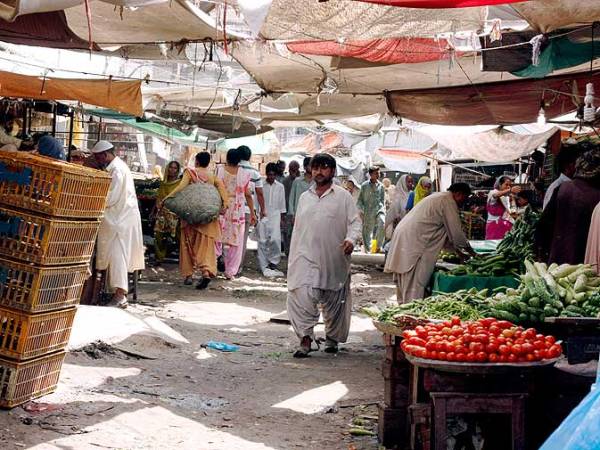
Karachi symbolises love and compassion mixed with endurance and peace. PHOTO: REUTERS
Karachi is to Pakistan what Pakistan is to the rest of the world – a place of contradictions! It is a really difficult task when one has to explain this city to a person who has only been exposed to it via the media.
However, deep down, I enjoy this task.
So on one Friday morning when there was not much work to do, I received a question from an anonymous blogger asking:
What is Karachi like?
Instead of sending a brief textual reply, I did this:
Well…
Karachi is lame,
Photo: ONLYINPAKISTAN.TUMBLR.COM
Yet it makes sense.
Photo: Humans of Karachi/Citizens Archive Pakistan
Karachi is serious,
Yet it knows how to smile.
Photo: Humans of Karachi/Citizens Archive Pakistan
Karachi is cheap,
Yet it is fancy.
Karachi is conservative,
Yet it is open minded.
Karachi is orthodox,
Yet it is contemporary.
Karachi is dirty,
Yet it is beautiful.
Karachi is crowded,
Yet it is peaceful.
Karachi is backward,
Yet it is modern.
Karachi is dangerous,
Yet it is safe.
Karachi is old,
Yet it is new.
Karachi is all sorts of things!
Karachi is love.
Photo: Humans of Karachi/Citizens Archive Pakistan
Karachi is compassion.
Photo: Humans of Karachi/Citizens Archive Pakistan
Karachi is endurance.
Photo: Humans of Karachi/Citizens Archive Pakistan
Karachi is bizarre.
Photo: Humans of Karachi/Citizens Archive Pakistan
Karachi is patriotism.
Photo: Humans of Karachi/Citizens Archive Pakistan
Karachi is chai (tea).
Photo: Humans of Karachi/Citizens Archive Pakistan
Karachi is paan.
Karachi is so many things that I can go on forever!
The city of lights has a roller coaster journey for anyone who wants to explore this metropolisand all its contrasting beauty.

Waar: Pakistan’s stark reality or hope for the future?

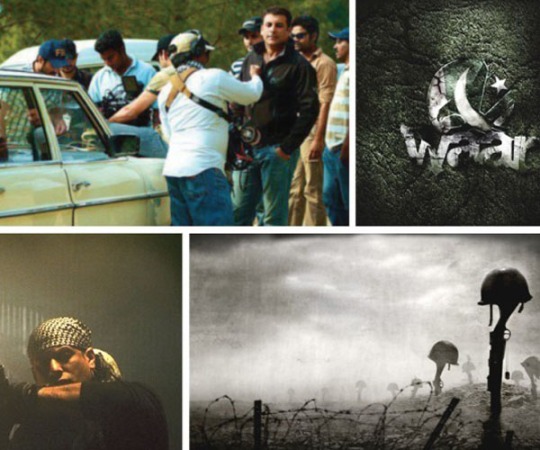
Waar revolves around a terrorist plot that sees two secret agents pitted against each other. PHOTO: FILE
After the release of Waar’s trailer online I found myself being annoyingly corrected about how to pronounce the movie’s name. I’d invariably call it ‘War’ in front of Urdu lovers who would tell me it was Waar, meaning ‘to strike’. However, my friends at school would chuckle at me when I called it Waar and insisted that it was ‘War’. 
As irritating as this was, there is an even more infuriating phrase I am certain you have heard when people discuss local ventures including films. Just like a worn-out bandage no longer covers or protects a scar, you’ll find this phrase invariably attached to discussions about new initiatives in our country. This maddening expression is: ‘in Pakistan’.
If you probe deeper into that phrase, perhaps you will understand why a film like Waar will help eject those two words from our discourse. However, first let’s set aside the geographical element to the two words ‘in Pakistan’ for a moment, and look at how it’s used. Examples include:
“That’s not possible in Pakistan.”
“This is made here in Pakistan?”
“That won’t work in Pakistan.”
Do you see how those two words reflect a worrying inferiority complex coupled with a puzzling negativity about our own country? It suggests a fatalism that assumes that excellence is somehow impossible to achieve because of the challenges we face. Now, to further understand what I am trying to say, re-read the above questions without the last two words and you will find that they still make perfect sense. So why say them and doubt our potential?
It is this psyche that a superbly-made film like Waar will hopefully change. For those who are eagerly awaiting it, some details first before returning to the main point.
Waar revolves around a terrorist plot that sees two secret agents pitted against each other. There is no doubt that this film has breathtaking production value; and no expense or effort has been spared in making spectacular helicopter sequences and sweeping aerial shots. However, apart from the impressive big money effects, there are some truly memorable scenes that I think make a broader point.
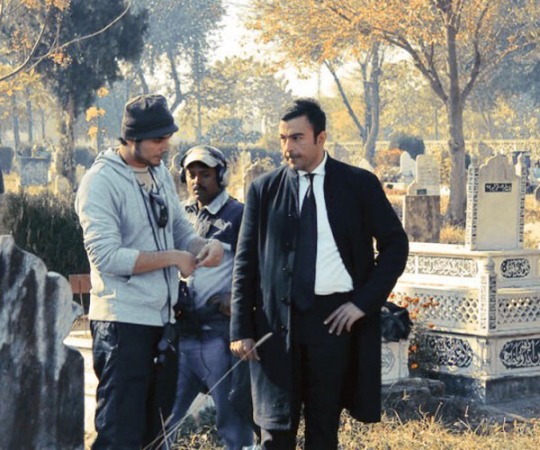
A scene from the shooting of Bilal Lashari’s first feature film Waar. Photo: Publicity
From an ingenious raid that involves the ever-popular cricket, to an attack that’s shot alongside a tantalisingly sinister dance sequence, there are some truly amazing moments to appreciate. The cinematography and epic soundtrack could see this film give any Hollywood flick a run for its money.
However, there’s more.
If you are one of those who have issues with the way women are generally portrayed in cinema, you are in for a treat because Aisha Khan plays a confident agent while Meesha Shafi excels in the rare role of a vamp playing a double game. That’s not to say that there isn’t plenty for the man’s man too. The lead characters are every inch the Daniel Craig type – fearless, macho men of few words that most guys can relate to, or so they think!
Aisha Khan plays a confident and unapologetic agent in Waar. Photo: Publicity
However, unlike a Hollywood blockbuster like GI Joe, whose stereotypical portrayal of Pakistan will leave you feeling alienated if not angry, Waar leaves you feeling like you could truly relate to the tragedy and the tones of patriotism. As a nation that is exposed to the scourge of terrorism on a daily basis, I believe we’ve become desensitised to violence on news bulletins, and almost resigned to being negative about a better future. Hence, the alarming news bulletins, melancholic funerals and barbaric violence in the film are striking in how they resemble our reality.
It still remains to be seen if non-male audiences will be turned off by the gore, swearing and machismo. Although I can’t be certain what rating it will obtain, I do hope that the censors will realise that we are used to worse on a daily basis and can handle edgy content.
To round things up, although there is much that is sombre about the film, there is even more to celebrate about Waar. While the reality of terrorism shown in the film is stark and concerning, there is also an enduring hope for the better.
Scenes from Waar. Photo: File
This film – which has been years in the making – leaves you feeling proud of our ability to overcome struggles. It also serves as a reminder that even though the subject matter of our daily lives can be brutal, there is plenty to suggest that we needn’t always be so despondent. In spite of the challenges around us, we do have the potential to strike out and achieve our goals.
On a more personal note, I hope Waar’s release helps drive this point into the rigid mind-set of some Pakistanis. Those who doubt our country’s potential should take note of the zaniness of Zinda Bhaag, the humour of Main Hoon Shahid Afridi and the brilliant production of Waar, and really start having faith in ourselves.
The efforts of our local entrepreneurs and film-makers really are proof that anything is possible here (in Pakistan).

Khewra salt mines: Healing heights

The world’s second largest salt mines claim to have healing powers in addition to their scenic beauty. PHOTO: EXPRESS
ISLAMABAD: The Khewra Salt Mines are the world’s second largest salt mines. Spread over 186 miles lengthwise, they rise to an average 2,200 feet. These scenic beauties produce over 850,000 tonnes of rock salt annually. And that’s not all. They have the reputation of having healing powers, too. Owing to health benefits of its micro-climate, the mines have a twelve-bed therapy centre called the Khewra Asthma Clinic. It was established in December, 2005, by Pakistan Mineral Development Corporation (PMDC) but it became fully operational in March, 2007.
While terrorism has taken its toll, badly hurting the tourism industry in Pakistan, these mines still have great scope as a tourist centre but only if they are properly facilitated and maintained. They can attract the asthma patients.
Breathing free
Khewra Asthma Clinic is the first of its kind in Pakistan. It has been established in line with similar resorts in Poland and Ukraine.
With antibacterial salt particles in sterile environment, breathing in the clinic air helps clear out air passages in the lungs of those having respiratory problems, especially the asthma patients. They are required to spend around 110 hours in the clinic during ten days of treatment, which costs Rs6,300.
Dr Akhlaq Bukhari, the senior doctor at the asthma clinic, says no medication is used.
“There is a 70-80 percent recovery for the young, and 50 percent for people above the age of 40,” he explains. “At the clinic, 35-40 patients come from all over the country.”
Tourist resort
The clinic opened up in 2005 but the tourist resort was established as early as 2002.
“Local and foreign visitors come to the site all the year round,” says a PMDC official. The mines have enchanting sight to see and a train that carries tourists around.
About 160 kilometres from Islamabad, coming through the Motorway, the visitors have to traverse a single-track, dusty and uneven road that takes them to the mines.
There are no quality shops or cafes, and no secure parking lots. The unsightly market does not have good souvenirs or gifts. The site itself has great potential to cater to a burgeoning market.
Silent sanctuary
On the inside, the mines are cool and serene, in contrast to the hot exterior.
Although the tourist guide’s dimly-lit torch does not provide much clarity of vision, the images of Pakistan’s luminaries and famous landmarks, can be seen. All of them chiselled out of rock salt or made of hard rock salt blocks.
With 40km cumulative length of all the driveways, the Khewra Salts Mines are a spectacular sight that can make the country proud. With a little more care and maintenance.