Monday, 14 October 2013

Waar: Pakistan’s stark reality or hope for the future?

Waar revolves around a terrorist plot that sees two secret agents pitted against each other. PHOTO: FILE
After the release of Waar’s trailer online I found myself being annoyingly corrected about how to pronounce the movie’s name. I’d invariably call it ‘War’ in front of Urdu lovers who would tell me it was Waar, meaning ‘to strike’. However, my friends at school would chuckle at me when I called it Waar and insisted that it was ‘War’. 
As irritating as this was, there is an even more infuriating phrase I am certain you have heard when people discuss local ventures including films. Just like a worn-out bandage no longer covers or protects a scar, you’ll find this phrase invariably attached to discussions about new initiatives in our country. This maddening expression is: ‘in Pakistan’.
If you probe deeper into that phrase, perhaps you will understand why a film like Waar will help eject those two words from our discourse. However, first let’s set aside the geographical element to the two words ‘in Pakistan’ for a moment, and look at how it’s used. Examples include:
“That’s not possible in Pakistan.”
“This is made here in Pakistan?”
“That won’t work in Pakistan.”
Do you see how those two words reflect a worrying inferiority complex coupled with a puzzling negativity about our own country? It suggests a fatalism that assumes that excellence is somehow impossible to achieve because of the challenges we face. Now, to further understand what I am trying to say, re-read the above questions without the last two words and you will find that they still make perfect sense. So why say them and doubt our potential?
It is this psyche that a superbly-made film like Waar will hopefully change. For those who are eagerly awaiting it, some details first before returning to the main point.
Waar revolves around a terrorist plot that sees two secret agents pitted against each other. There is no doubt that this film has breathtaking production value; and no expense or effort has been spared in making spectacular helicopter sequences and sweeping aerial shots. However, apart from the impressive big money effects, there are some truly memorable scenes that I think make a broader point.
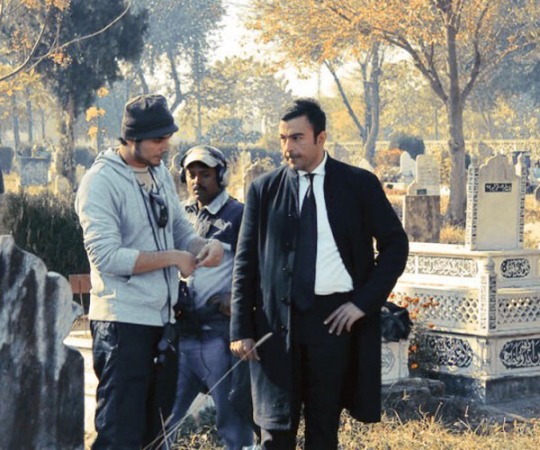
A scene from the shooting of Bilal Lashari’s first feature film Waar. Photo: Publicity
From an ingenious raid that involves the ever-popular cricket, to an attack that’s shot alongside a tantalisingly sinister dance sequence, there are some truly amazing moments to appreciate. The cinematography and epic soundtrack could see this film give any Hollywood flick a run for its money.
However, there’s more.
If you are one of those who have issues with the way women are generally portrayed in cinema, you are in for a treat because Aisha Khan plays a confident agent while Meesha Shafi excels in the rare role of a vamp playing a double game. That’s not to say that there isn’t plenty for the man’s man too. The lead characters are every inch the Daniel Craig type – fearless, macho men of few words that most guys can relate to, or so they think!

Aisha Khan plays a confident and unapologetic agent in Waar. Photo: Publicity
However, unlike a Hollywood blockbuster like GI Joe, whose stereotypical portrayal of Pakistan will leave you feeling alienated if not angry, Waar leaves you feeling like you could truly relate to the tragedy and the tones of patriotism. As a nation that is exposed to the scourge of terrorism on a daily basis, I believe we’ve become desensitised to violence on news bulletins, and almost resigned to being negative about a better future. Hence, the alarming news bulletins, melancholic funerals and barbaric violence in the film are striking in how they resemble our reality.
It still remains to be seen if non-male audiences will be turned off by the gore, swearing and machismo. Although I can’t be certain what rating it will obtain, I do hope that the censors will realise that we are used to worse on a daily basis and can handle edgy content.
To round things up, although there is much that is sombre about the film, there is even more to celebrate about Waar. While the reality of terrorism shown in the film is stark and concerning, there is also an enduring hope for the better.
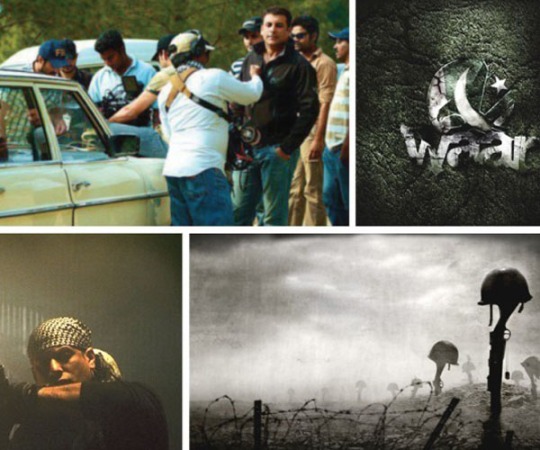
Scenes from Waar. Photo: File
This film – which has been years in the making – leaves you feeling proud of our ability to overcome struggles. It also serves as a reminder that even though the subject matter of our daily lives can be brutal, there is plenty to suggest that we needn’t always be so despondent. In spite of the challenges around us, we do have the potential to strike out and achieve our goals.
On a more personal note, I hope Waar’s release helps drive this point into the rigid mind-set of some Pakistanis. Those who doubt our country’s potential should take note of the zaniness of Zinda Bhaag, the humour of Main Hoon Shahid Afridi and the brilliant production of Waar, and really start having faith in ourselves.
The efforts of our local entrepreneurs and film-makers really are proof that anything is possible here (in Pakistan).

Khewra salt mines: Healing heights

The world’s second largest salt mines claim to have healing powers in addition to their scenic beauty. PHOTO: EXPRESS
ISLAMABAD: The Khewra Salt Mines are the world’s second largest salt mines. Spread over 186 miles lengthwise, they rise to an average 2,200 feet. These scenic beauties produce over 850,000 tonnes of rock salt annually. And that’s not all. They have the reputation of having healing powers, too. Owing to health benefits of its micro-climate, the mines have a twelve-bed therapy centre called the Khewra Asthma Clinic. It was established in December, 2005, by Pakistan Mineral Development Corporation (PMDC) but it became fully operational in March, 2007.
While terrorism has taken its toll, badly hurting the tourism industry in Pakistan, these mines still have great scope as a tourist centre but only if they are properly facilitated and maintained. They can attract the asthma patients.
Breathing free
Khewra Asthma Clinic is the first of its kind in Pakistan. It has been established in line with similar resorts in Poland and Ukraine.
With antibacterial salt particles in sterile environment, breathing in the clinic air helps clear out air passages in the lungs of those having respiratory problems, especially the asthma patients. They are required to spend around 110 hours in the clinic during ten days of treatment, which costs Rs6,300.
Dr Akhlaq Bukhari, the senior doctor at the asthma clinic, says no medication is used.
“There is a 70-80 percent recovery for the young, and 50 percent for people above the age of 40,” he explains. “At the clinic, 35-40 patients come from all over the country.”
Tourist resort
The clinic opened up in 2005 but the tourist resort was established as early as 2002.
“Local and foreign visitors come to the site all the year round,” says a PMDC official. The mines have enchanting sight to see and a train that carries tourists around.
About 160 kilometres from Islamabad, coming through the Motorway, the visitors have to traverse a single-track, dusty and uneven road that takes them to the mines.
There are no quality shops or cafes, and no secure parking lots. The unsightly market does not have good souvenirs or gifts. The site itself has great potential to cater to a burgeoning market.
Silent sanctuary
On the inside, the mines are cool and serene, in contrast to the hot exterior.
Although the tourist guide’s dimly-lit torch does not provide much clarity of vision, the images of Pakistan’s luminaries and famous landmarks, can be seen. All of them chiselled out of rock salt or made of hard rock salt blocks.
With 40km cumulative length of all the driveways, the Khewra Salts Mines are a spectacular sight that can make the country proud. With a little more care and maintenance.

Sunday, 13 October 2013

Moenjodaro could disappear in 20 years: Experts

Moen Jo Daro, the most important site of the Indus civilisation lies in Pakistan. PHOTO: FILE
One of the oldest archaeological sites in Pakistan and the world’s only surviving Bronze Age metropolis, Moen Jo Daro could disappear in 20 years in the absence of an urgent rescue plan, The Telegraph reported on Sunday.
Poor planning on the government’s part, public indifference and lack of tourism infrastructure has meant that the world’s oldest planned urban landscape could be corroded to dust.
While international experts and Pakistani officials met last week in Karachi to come up with ways to save the site, the need for a restoration plan is immediate, the report stated.
Jawad Aziz, a Unesco heritage expert, said the need for action is vital.
“I’ve visited the site and seen the bricks,” he said. “They will be crumbling down, so it’s very urgent.”
According to the report, “Summer temperatures of 51c, winter frosts, torrential monsoon rains and humid air all combine to leave the sun-dried clay bricks with a dusting of salt crystals that dries them out and sucks them to dust.”
Officials said that even though preservation work has been going on since the first major excavation in 1924 and was intensified when Moen Jo Daro was made a World Heritage Site, the initiative suffered from an unsteady flow of funds.
Dr Asma Ibrahim who is a leading Pakistani archaeologist told The Telegraph, “there is no department with expertise, no decisions taken for the last two year. The way things are going, it will survive maybe only another 20 years.”

PLBW day 3: Creative hits and misses

Giving an oriental touch to his creations, designer Kamiar Rokni showcased the design house’s best. PHOTO: FILE
LAHORE: 
PFDC L’Oréal Paris Bridal Week came to a spectacular finish and presented an all-rounded overview of the fashion dos this season, notwithstanding the handful of dull moments. With the House of Kamiar Rokni marking the finale, the day had a lot to offer. The event had a myriad of attractions but one of the amusing features was the appearance of Salman Khan’s look-alike during Nomi Ansari’s show. Out of the multitude of trends showcased, some to look out for this fashion season would have to be cotton formals, double-textured saris and sheer nets draped over prints.
Nomi Ansari
When it comes to playing with colours, no one does a better job than Nomi. Sponsored by Bank Alfalah, Nomi’s show started off with model Nadia Hussain setting the runway on fire in a canopy skirt made out of the bank’s credit cards. Showcasing a wide array of colours, the collection looked fabulous and wearable. Nomi’s use of heavy embroidery and silk saris with chiffon pallu, which was a constant feature of the Bridal Week, were an instant hit. Male models sporting stylised Jinnah caps and a moustache added to the dramatic aura of the ensemble. The collection comprised of neon-colorued jamavar and kamkhab sherwanis, which enhanced the perky feel of the showcase. What stole the show, however, was the Bollywood performance by Salman Khan’s look-alike!
Sana Safinaz
The dynamic duo dazzled the audience with a take different from their usual one. They promised a completely revamped collection in the preview, and they delivered! The collection was consistent and certainly one of the best of the evening. Showcasing saris with churidars, cotton lehengas with velvet detailing and jumpsuits with embellished capes, Sana Safinaz rekindled their brand image. Very impressive indeed!
Zara Shahjahan
Zara debuted at the PFDC Bridal Week with her collection titled True Love, which reflected her aesthetic sense and love for floral hues and femininity. The most eye-catching of her pieces were the ones with embellished sheer net over printed silk lining. Zara’s collection epitomised her fresh and experimental approach to fashion design. I wish we could’ve seen more of that. Trendy, volumised lehengas with pockets were young and fun. While some of the outfits were too heavily embellished with diamantes, it was refreshing to see that Zara stepped out of her comfort zone and dared to diverge from fashion norms. Her midnight blue ensemble with gold work was certainly the highlight of the collection.
Asifa and Nabeel
Asifa and Nabeel certainly understand their design forte and work within the parameters of what they know best. Their designs are generally known for their style, detail and craftsmanship. However, the collection that they showcased was a mix of hits and misses. The outfit that stood out among the entire collection was a plain black shirt with a velvet-detailed back, maroon jamavar pants and a heavily embellished dupatta. While their red-coloured bridal wear was typical and lacklustre, Asifa and Nabeel’s use of earthy tones in their outfits stood out.
Sahar Atif
Although Sahar has been showcasing her work since years, her collection titled Saai lacked oomph and was not aesthetically pleasing. Some of the outfits were clearly Shehla Chatoor rip-offs and gave a gola ganda feel. Rainbow-coloured saris with jackets were a letdown. Chatappati is generally a tricky design and if used properly, can look beautiful. If not, disaster! Sahar’s usage of the design in lehengas didn’t fit the bill. Overall, the collection was neither pleasing to the eye nor cohesive.
Kamiar Rokni
Giving an oriental touch to his creations, designer Kamiar Rokni showcased the design house’s best. With some North African-inspired looks, the collection deviated from his usual work. While the outfits weren’t up to the mark stylistically speaking, the workmanship was Kamiar’s finest. The amount of thought put into the collection was evident. However, the heavily stylised sleeves and cropped jackets didn’t seem to wow the audience. They would have been better suited for a prêt collection, instead for a bridal one. The lime green and blue outfit worn by Neha was exceptionally exquisite. Staying true to what symbolises the Orient, Kamiar aptly made use of vivid colours and motifs.

Malala is a drama staged by the US: Jamshed Dasti

File photo of Member of National Assembly Jamshed Dasti. PHOTO: FILE
MULTAN: Member of National Assembly Jamshed Dasti said on Sunday that teen activist Malala Yousufzai’s meteoric rise to fame was nothing more than a “drama” orchestrated by the United States to disrupt the government’s efforts to initiate peace talks with the Taliban.
Dasti, an independent candidate reportedly pursuing membership in the Pakistan Tehreek-e-Insaf, was talking to the media about Malala’s nomination for the Nobel Prize during a press conference in Multan.
He said the US never wanted Pakistan to negotiate with the Taliban, and was using Malala to defame the Taliban and Islam.
Dasti concluded by saying the nation and the media should “stop this drama” and concern themselves with the real issues of Pakistan.
The MNA’s words mirrored the Tehreek-e-Taliban Pakistan’s (TTP) sentiments when the young girl missed out on the Nobel Peace Prize.
TTP central spokesman Shahidullah Shahid had said the 16-year-old had done nothing to deserve the Nobel, which went to the Organisation for the Prohibition of Chemical Weapons (OPCW) for its work to rid the world of chemical arms.
“We are delighted that she didn’t get it. She did nothing big so it’s good that she didn’t get it.”
“This award should be given to the real Muslims who are struggling for Islam. Malala is against Islam, she is secular,” he had gone on to say.
The TTP had shot Malala in the head on her school bus on October 9 last year for speaking out against them, and brazenly added that they would do it again.
Ironically, in a recent BBC interview, Malala said she backed dialogue with the Taliban.
Anti-Malala sentiment has reportedly gained momentum in Pakistan since her nomination for the Nobel Peace Prize. A recent article on the phenomenon in the New York Times stated, “The reaction seemed to stem from different places: sensitivity at Western hectoring, a confused narrative about the Taliban and a sense of resentment or downright jealousy.”

Will Wilsher Leave Arsenal For Manu?? Another Traitor??

top.jpg
In the first half of Arsenal's Champions League tie against Napoli last night, the Gunners showed a brand of football so slick and so impressive that the strongest team in the Serie A were simply blown away. 

Arsenal piled on the pressure in the opening 45 minutes scoring two quick goals courtesy of Mesut Ozil and Olivier Giroud, which proved to be an unassailable lead. 

This devastating brand of football was done with Arsenal's golden boy Jack Wilshere on the bench. 

If the form of Aaron Ramsey, Mathieu Flamini and Ozil continue in the same vain, that may be a position Wilshere will have to get used to. 

The last handful of games has seen Wilshere moved out of his natural central position on to the left wing - something he clearly isn't comfortable with. 

The move is due to the fact that Ramsey has found the form of his life whilst Flamini has brought a defensive discipline to the side for the first time since the Frenchman left in 2008. 

Also, trying to displace the 'King of Assists' Mesut Ozil will take some doing if Wilshere wants to play in his favoured advanced midfield role. 

It seems that Wilshere will be on the wings for the foreseeable future. But what happens when natural left wing players Lukas Podolski and Alex Oxlade-Chamberlain return to the squad? Wilshere will take a seat on the bench. 

But it needn't be this way for the boy hailed as England's saviour. 

Heading north to the crumbling Premier League champions and we find a gaping Wilshere-shaped hole in the Manchester United team. 

David Moyes' men are crying out for a creative, passionate player to fill the void left by Paul Scholes. Thiago Alcantara and Cesc Fabregas turned down Manchester United's advances but the best replacement possible lies at the Emirates. 

If Ramsey's form continues, it is unlikely the 22-year-old will be displaced, even by Wilshere. As they are similar ages, it means Wilshere faces a career in the shadow of the fast-developing Welshman. 

Unlike at the home of the Gunners, Wilshere is guaranteed a first team place at Old Trafford. He will get every, if not more, chances to win trophies than at Arsenal. 

If Wilshere wants to fulfil his potential, he needs playing time. Not only that, he needs to be the main man. Wenger no longer needs Wilshere on a tactical basis and is unlikely to give him the environment to blossom in to the great player he can become. 

David Silva 'very happy' to stay at Manchester City

David Silva 'very happy' to stay at Manchester City
The attacking midfielder has once again been linked with Spanish giants Real Madrid but insists that he will stick to the long-term contract that he signed in 2012
Manchester City attacking midfielder David Silva has played down renewed speculation linking him with a move to Real Madrid.

The Spain international has been listed as a reported target for the Spanish giants on numerous occasions since his arrival in Manchester from Valencia in 2010.


"I'm very happy in Manchester and I think this is similar to what happens every year," the 27-year-old told Cadena Cope when asked about new links.

"There are always rumours and, in the end, the player has to be calm."

Silva, who is currently on international duty with Spain, signed a new five-year deal with City in September 2012.

"I renewed my contract because I am happy in Manchester," he added